




What's Happening?
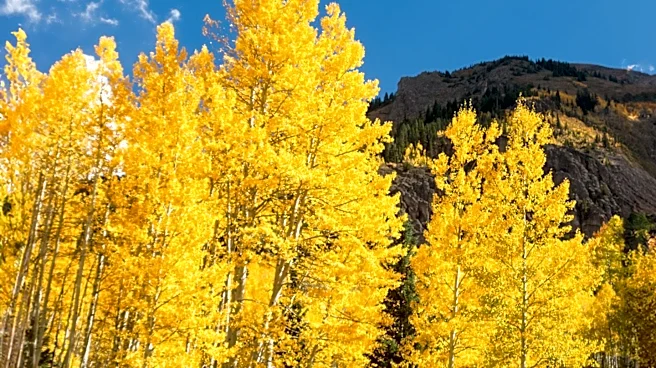
John Murgel, a horticulture specialist with Colorado State University Extension, advises against planting aspen trees in home yards despite their aesthetic appeal, particularly during the fall season. Many tourists and residents are drawn to the vibrant
red, orange, and gold leaves of aspens in the mountains and consider planting them at home to evoke memories of these natural landscapes. However, Murgel frequently receives questions from the public regarding the suitability of aspens for residential landscaping and consistently recommends against it. He previously discussed the scientific reasons behind this recommendation in 2024, and that conversation is being revisited due to continued public interest.
Why It's Important?
This advice is important for homeowners in Colorado and similar regions who might be tempted to plant aspens, as it can prevent significant landscaping challenges and financial costs. Aspen trees, while beautiful in their natural mountain habitat, are not well-suited for typical residential yard conditions. They are prone to various diseases and pests when planted outside their ideal environment, requiring extensive care and often leading to premature decline. Furthermore, aspens are known for their aggressive root systems and tendency to spread through suckers, which can damage foundations, sidewalks, and plumbing, and quickly overtake a yard. Understanding these horticultural realities can save homeowners from frustration, repeated maintenance efforts, and the expense of removing unhealthy or problematic trees, promoting more sustainable and appropriate landscaping choices for urban and suburban settings.
What's Next?
Homeowners in Colorado and other areas with similar climates should seek advice from local horticulture specialists or university extension services before selecting trees for their yards. Murgel's continued guidance suggests an ongoing need for public education regarding suitable tree species for residential landscapes. Future efforts might include educational campaigns or resources from Colorado State University Extension to inform the public about the specific challenges of planting aspens in home environments and to suggest alternative, more resilient tree species that offer similar aesthetic benefits without the associated problems. This ongoing dialogue aims to align public desire for natural beauty with practical horticultural realities, fostering healthier urban forests and more manageable home gardens.
Beyond the Headlines
The recommendation against planting aspens in home yards highlights a broader ecological principle: the importance of understanding a species' natural habitat and growth requirements before introducing it into an artificial environment. Aspens thrive in specific high-altitude, cool, and moist conditions, and their natural propagation through clonal colonies is ill-suited for confined urban spaces. This situation underscores the disconnect between idealized natural aesthetics and the practicalities of urban horticulture. It also touches on the concept of 'right plant, right place,' emphasizing that successful landscaping involves selecting plants that are adapted to local soil, climate, and space conditions, rather than simply choosing based on visual appeal. This approach not only benefits individual homeowners but also contributes to local biodiversity, reduces water usage, and minimizes the need for chemical interventions, promoting more resilient and sustainable urban ecosystems.