






What's Happening?
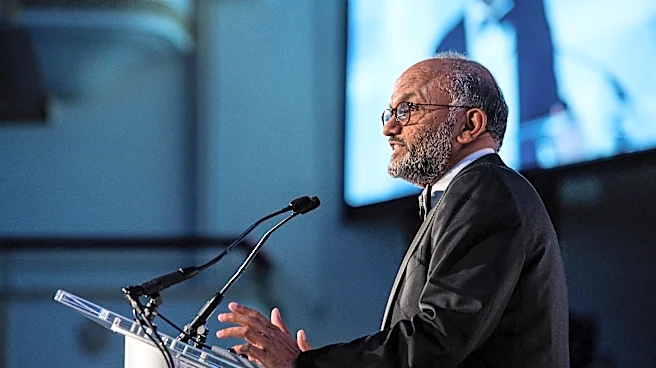
Reed Hastings, co-founder of Netflix, transitioned from co-CEO to Executive Chairman in January 2023, after 25 years leading the company. He handed over daily operations to Ted Sarandos and Greg Peters. Since stepping down, Hastings has engaged in significant
philanthropic endeavors and new business ventures. In September 2023, he invested $100 million to become the majority owner of Powder Mountain ski resort in Utah, aiming to balance private development with affordable public access. Additionally, in March 2025, Hastings donated $50 million to Bowdoin College to establish the Hastings Initiative for AI and Humanity, funding ten new faculty positions to explore the ethical, literary, economic, and legal implications of artificial intelligence. This follows previous substantial donations, including $120 million to historically Black colleges and universities in 2020 and a transfer of approximately $1.1 billion worth of Netflix stock to the Silicon Valley Community Foundation in early 2024. Hastings co-founded Netflix in 1997, initially as a DVD-rental service, and was instrumental in its evolution into a streaming giant.
Why It's Important?
Reed Hastings' shift from direct leadership at Netflix to focusing on philanthropy and new ventures highlights a growing trend among successful tech entrepreneurs to leverage their wealth and influence for broader societal impact. His investment in Powder Mountain demonstrates an innovative approach to business, attempting to create a sustainable model that combines high-end real estate with community-focused affordable access. The establishment of the Hastings Initiative for AI and Humanity at Bowdoin College is particularly significant, as it addresses the critical need for interdisciplinary research into the ethical and societal implications of artificial intelligence. This initiative could shape future policy discussions and academic understanding of AI's role in society. His substantial donations to educational institutions, especially those supporting underrepresented communities, underscore a commitment to addressing systemic inequalities and fostering future talent in critical fields. These actions reflect a strategic deployment of capital to influence technological development, education, and community resources.
What's Next?
The Hastings Initiative for AI and Humanity at Bowdoin College is expected to begin its research and educational programs, potentially becoming a leading voice in the ethical development and understanding of artificial intelligence. The ten new faculty positions will likely attract top scholars, fostering a new generation of thought leadership on AI's impact. At Powder Mountain, Hastings' model of combining private development with public access will continue to evolve, and its success or challenges could influence future approaches to resort management and community engagement in recreational areas. His ongoing philanthropic activities, particularly through the Silicon Valley Community Foundation, suggest continued significant investments in various causes. The long-term impact of these initiatives will be observed as they develop, potentially setting precedents for how tech leaders engage with societal challenges post-corporate leadership.
Beyond the Headlines
Hastings' post-Netflix career trajectory raises questions about the evolving role of tech founders as public figures and philanthropists. His approach to Powder Mountain, attempting to reconcile exclusivity with public benefit, reflects a complex challenge in balancing economic development with community needs and environmental stewardship. The focus on AI ethics through the Bowdoin College initiative underscores a growing recognition within the tech community of the profound societal implications of advanced technologies. This move suggests a proactive effort to guide AI development responsibly, moving beyond purely technological innovation to consider its human and cultural dimensions. His philanthropic strategy, which includes significant investments in education and community foundations, highlights a shift towards systemic change rather than isolated charitable acts, potentially influencing other high-net-worth individuals to adopt similar comprehensive approaches to giving.