







What's Happening?
Copia Power, a Salt Lake City-based developer of grid-connected power and data center infrastructure, is seeking to rezone approximately 3,100 acres near Tonopah in Arizona's far West Valley for its Belmont Energy Center project. The proposed development,
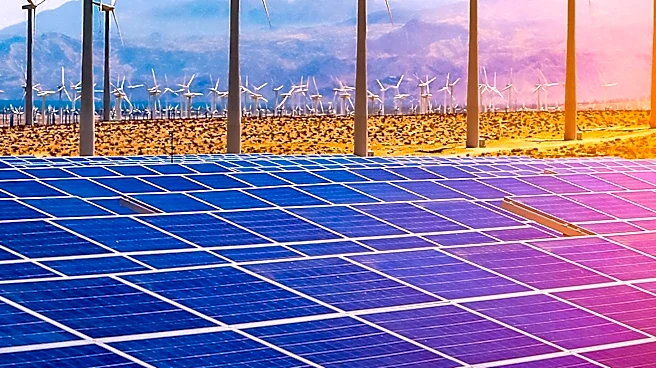
located about an hour west of Phoenix, is part of a larger 30,000-acre digital and power infrastructure campus planned for the Harquahala Valley. The Belmont Energy Center would allocate about 2,860 acres for utility-scale solar energy generation. The remaining 320 acres would be utilized for a gas generation facility, Battery Energy Storage Systems (BESS), and data centers. Copia Power owns some of the project parcels, with other portions held by a group of investors. This initiative aims to power future data centers with a combination of solar and gas generation, supported by battery storage.
Why It's Important?
This project by Copia Power is significant for Arizona's energy landscape and the broader U.S. digital infrastructure. The integration of large-scale solar generation with data centers and battery storage addresses the growing demand for sustainable and reliable power for energy-intensive data operations. This development supports the national push for renewable energy adoption while simultaneously bolstering the digital economy. For Arizona, it represents substantial investment, potential job creation, and a move towards a more diversified energy portfolio. The combination of solar, gas, and BESS provides a hybrid solution that can offer both clean energy and grid stability, which is crucial for critical infrastructure like data centers. This model could influence future developments in other regions facing similar challenges of powering expanding digital infrastructure sustainably.
What's Next?
Copia Power's rezoning request will undergo review by Maricopa County planning authorities. If approved, the project will proceed with further development and construction phases. This could involve securing additional permits, environmental impact assessments, and detailed engineering plans. The successful implementation of the Belmont Energy Center could attract more technology companies and data center operators to the region, further establishing the Harquahala Valley as a hub for digital infrastructure. We can anticipate continued growth in hybrid energy solutions that combine renewables with traditional sources and storage to meet the demands of high-load facilities. The project's progress will be closely watched as a model for sustainable data center development, potentially influencing future land use planning and energy policy in other states.
Beyond the Headlines
The Belmont Energy Center project highlights the evolving nexus between renewable energy and the digital economy. The increasing energy demands of data centers pose a significant challenge, and this project offers a scalable solution that integrates clean energy. Ethically, it addresses the environmental footprint of the digital age by powering data infrastructure with solar energy. Legally, the rezoning process and subsequent development will navigate complex land use regulations, environmental protections, and energy grid interconnection requirements, setting precedents for future large-scale projects. Culturally, it reflects a growing societal expectation for technology companies to operate sustainably. In the long term, such integrated energy and data infrastructure campuses could become a standard model, driving innovation in energy management, grid resilience, and sustainable technology deployment, ultimately shaping the future of both the energy sector and the digital economy in the U.S.