







What's Happening?
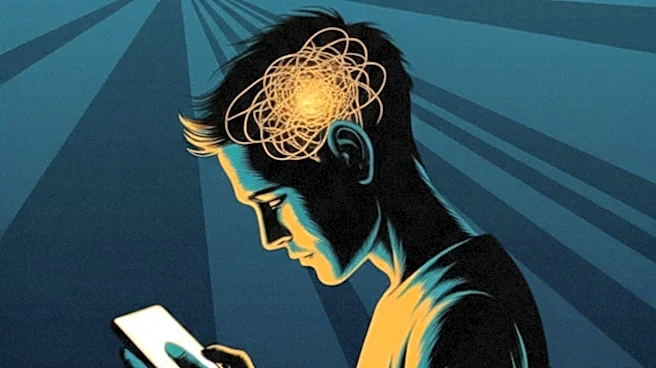
Dr. David Smith, a leading Scottish social psychologist from Robert Gordon University, has issued a warning regarding the increasing susceptibility of young men to the 'manosphere' and 'incel' cultures. This trend is attributed to feelings of loneliness,
financial pressures, and anxieties about their future. Dr. Smith suggests that the allure of wealth, status, and success promoted by 'alpha male' influencers, such as Andrew Tate, Jordan Peterson, and Sneako, is particularly appealing to men who perceive themselves as falling behind. The 'manosphere' is described as a rapidly growing online network that advocates for masculinity and misogyny, while 'incels' are men who identify with an 'involuntarily celibate' online subculture, often blaming feminists for their inability to form relationships.
Why It's Important?
This phenomenon highlights a significant societal concern regarding the mental health and social well-being of young men in the U.S. and globally. The appeal of 'alpha male' narratives and 'manosphere' ideologies can lead to the adoption of harmful attitudes, particularly misogyny, and can exacerbate feelings of anger and isolation. The Lancet Public Health report's call to treat online misogyny and the 'manosphere' as public health issues underscores the severity of the problem. The influence of social media algorithms, which can push users towards increasingly extreme content, further complicates efforts to address these issues. Understanding the underlying emotional needs that these online communities appear to fulfill is crucial for developing effective interventions and promoting healthier forms of male identity and social connection.
What's Next?
Addressing the growing influence of the 'manosphere' requires a multi-faceted approach. Dr. Smith emphasizes the need for a better understanding of the emotional needs that these groups meet for young men, such as providing a sense of belonging or an explanation for their struggles. Furthermore, there is a societal imperative to normalize conversations around men's mental health, encouraging open dialogue about feelings of inadequacy, depression, and sexual frustration. Efforts to educate young men about critical thinking regarding online content and the potential biases of social media algorithms could also be beneficial. Ultimately, fostering environments that promote healthy masculinity, provide genuine support, and offer constructive pathways to success and well-being will be essential in counteracting the appeal of toxic online cultures.
Beyond the Headlines
The rise of the 'manosphere' and 'incel' cultures reflects deeper societal anxieties about economic insecurity, changing gender roles, and the impact of digital connectivity on social development. The promise of quick fixes for complex problems, often packaged with a strong, confident persona, can be particularly attractive in an era where traditional pathways to success seem increasingly out of reach for many. This situation also raises questions about the role of online platforms in shaping public discourse and individual identities, and the ethical responsibilities of influencers. The long-term implications could include increased social polarization, a decline in healthy interpersonal relationships, and a perpetuation of harmful stereotypes, necessitating a broader societal conversation about digital literacy, mental health support, and the cultivation of inclusive communities.