





What's Happening?
Philadelphia Mayor Cherelle L. Parker has expressed her desire for a domed stadium to serve as the potential new home for the Philadelphia Eagles. During an appearance on WMMR-FM, Mayor Parker stated, “I want a dome. ... I just saw a rendering of this
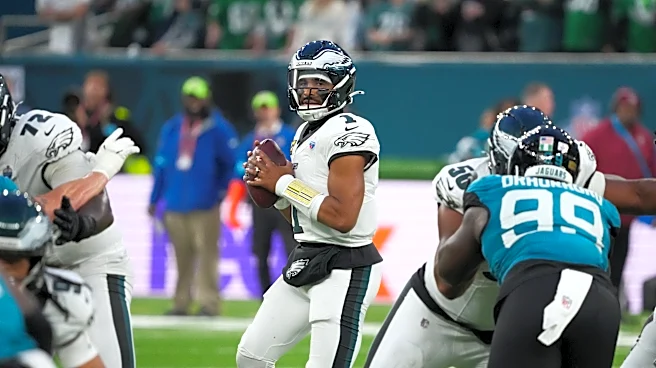
beautiful dome that they’re talking about for the Bears.” She emphasized the city's leadership coming together for a significant project. The Eagles currently play at Lincoln Financial Field, with their lease agreement extending until 2032. However, Eagles owner Jeffrey Lurie has initiated what he termed “exploratory research” into either a new stadium construction or a renovation of the existing facility, as reported by the Philadelphia Inquirer on November 20.
Why It's Important?
The push for a domed stadium by Philadelphia's mayor signifies a potential major infrastructure project with significant implications for the city's economy and sports landscape. A domed stadium could attract a wider array of events beyond football, such as concerts, conventions, and other sporting events, which would generate additional revenue and tourism for Philadelphia. This initiative could also enhance the city's profile as a premier destination for large-scale events, potentially creating jobs and stimulating local businesses. For the Eagles, a new or renovated stadium, especially one with a dome, could offer enhanced fan experiences and new revenue streams through luxury suites and year-round event hosting, solidifying their long-term presence and financial stability in the city. The decision to pursue such a project would involve substantial public and private investment, impacting taxpayers and various stakeholders.
What's Next?
The Eagles are currently under a lease agreement at Lincoln Financial Field until 2032, providing a timeframe for planning and development. Eagles owner Jeffrey Lurie has already begun “exploratory research” into stadium options, indicating that discussions and evaluations are underway. The mayor's public endorsement for a domed facility suggests that this preference will likely be a key consideration in future planning. Next steps will likely involve feasibility studies, architectural renderings, and financial analyses to determine the viability and cost of a new domed stadium. Public and private partnerships will need to be forged, and community engagement will be crucial as the project moves forward. The city and the team will need to collaborate on securing funding, permits, and public support for such a large-scale undertaking.
Beyond the Headlines
The discussion around a new domed stadium for the Eagles extends beyond just sports, touching upon urban development, economic strategy, and civic pride. A state-of-the-art domed facility could serve as a catalyst for revitalizing surrounding areas, attracting new businesses, and improving public infrastructure. It also reflects a broader trend in professional sports where teams seek modern venues that offer diverse entertainment options and year-round utility, moving beyond single-sport functionality. The comparison to the Chicago Bears' potential domed stadium highlights a competitive aspect among major U.S. cities to offer top-tier facilities. This project could also spark debates about public funding for private sports franchises, balancing economic benefits with taxpayer burden, and the long-term vision for Philadelphia's urban core.