


What's Happening?
D-Wave Quantum Inc. announced its financial results for the third quarter ended September 30, 2026, reporting a 21% year-over-year increase in revenue, reaching $4.5 million. The company also secured a definitive agreement with the U.S. Department of
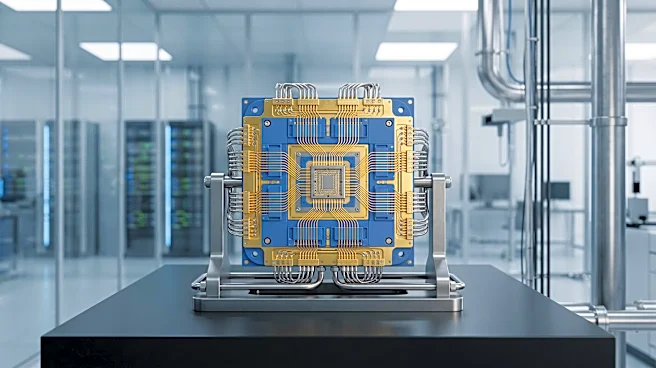
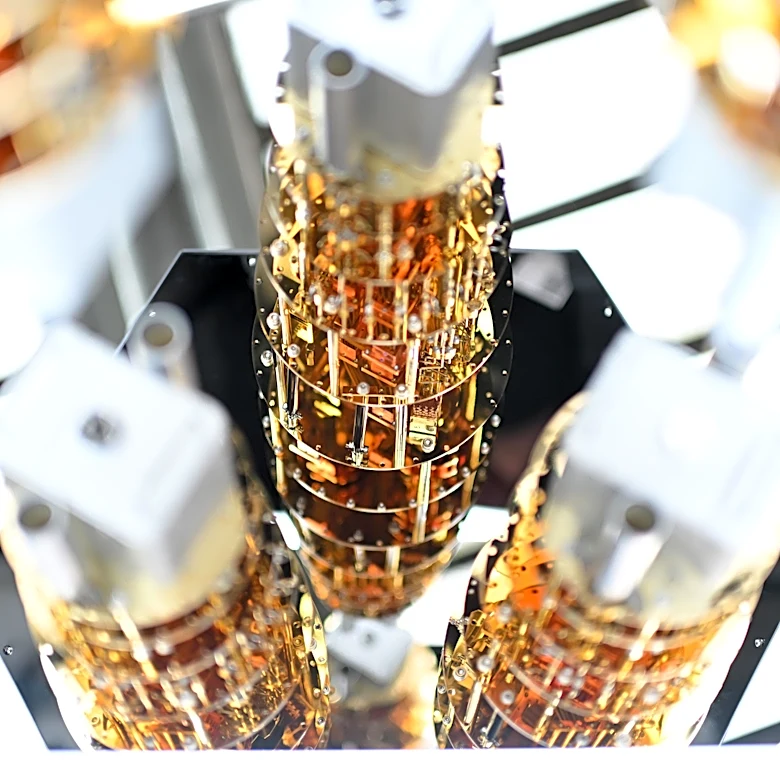
Commerce for up to $100 million in funding from the U.S. CHIPS and Science Act. This funding, to be disbursed in installments based on milestone achievements, is earmarked for the development of D-Wave's next-generation quantum computers. These include a 100,000-qubit annealing quantum computer aimed at enhancing performance in optimization, materials simulation, blockchain, and artificial intelligence, as well as a 10,000-qubit gate-model quantum computer designed to support 100 logical qubits capable of over one million reliable operations for applications in quantum chemistry and AI. Additionally, D-Wave launched a beta program for its gate-model quantum computing simulator, which focuses on error-aware programming capabilities.
Why It's Important?
The $100 million funding from the U.S. CHIPS and Science Act highlights the U.S. government's strategic investment in advancing quantum computing capabilities domestically. This significant capital injection will accelerate D-Wave's research and development efforts, particularly in scaling up both annealing and gate-model quantum technologies. For the U.S. technology sector, this could bolster its competitive edge in the global quantum race, fostering innovation and potentially creating new high-tech jobs. The development of more powerful quantum computers has implications across various industries, from enhancing drug discovery and materials science to optimizing complex logistical problems and strengthening cybersecurity. The focus on error-aware programming in the new simulator is crucial for developing more robust and reliable quantum applications, addressing one of the major challenges in quantum computing. This investment also signals a broader commitment to securing critical technologies and supply chains within the U.S.
What's Next?
D-Wave will proceed with the development of its next-generation quantum computers, with funding disbursements contingent on meeting specified milestones and conditions outlined in the agreement with the U.S. Department of Commerce. The beta program for the gate-model quantum computing simulator will continue, allowing participants like BBVA, FirstQFM, Florida Atlantic University, and the Jülich Supercomputing Centre to develop quantum applications and provide feedback. This feedback will be critical for refining D-Wave's forthcoming gate-model systems. The company is also expected to continue expanding its commercial reach and strategic partnerships, as evidenced by recent collaborations with CGI and LG CNS, aiming to integrate quantum computing into various enterprise applications. Future financial reports will likely detail the progress on these development initiatives and the impact of the CHIPS Act funding on D-Wave's operational and technological advancements.
Beyond the Headlines
The U.S. CHIPS and Science Act funding for D-Wave underscores a broader national strategy to reduce reliance on foreign technology and establish leadership in critical emerging fields like quantum computing. This initiative reflects a recognition that quantum technology could redefine national security, economic competitiveness, and scientific discovery. The emphasis on both annealing and gate-model quantum computers by D-Wave, supported by this funding, suggests a diversified approach to quantum development, acknowledging the distinct strengths and applications of each paradigm. The long-term implications include the potential for quantum supremacy in specific computational tasks, which could lead to breakthroughs in fields currently limited by classical computing power. However, the success of these investments will depend on overcoming significant technical hurdles, including qubit stability, error correction, and the development of practical quantum algorithms for real-world problems. The ethical and societal implications of advanced quantum capabilities, particularly in areas like cryptography and artificial intelligence, will also become increasingly important considerations.