
What's Happening?
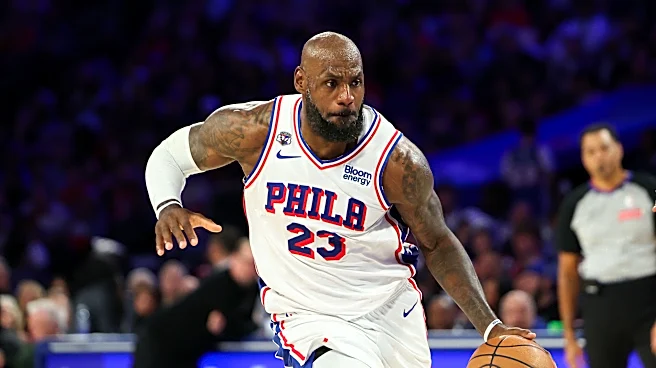
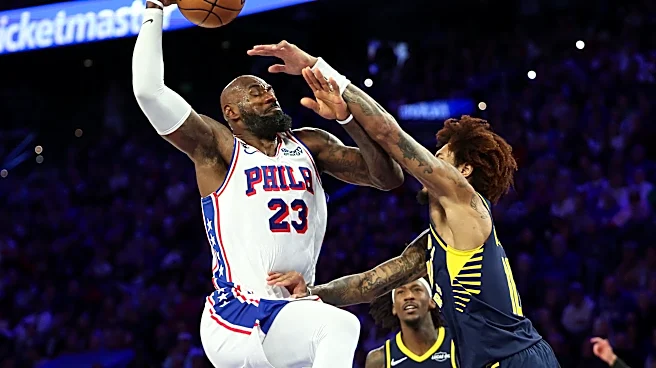
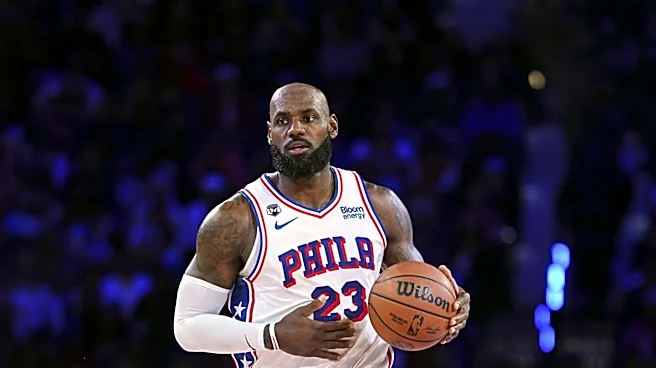
Philadelphia 76ers superstar LeBron James has publicly refuted an ESPN report by Dave McMenamin, which claimed he asked the team's coaching staff to be 'patient' with his conditioning at the start of the season.
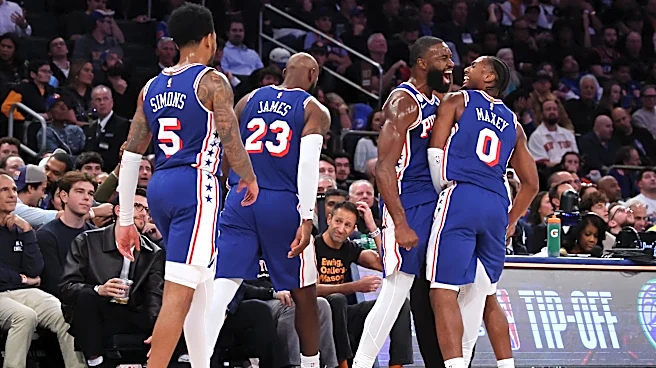
James took to social media to deny the report, stating that the words attributed to him never came out of his mouth. The report suggested James expected to find his rhythm and get his conditioning in line by December. James, 41, missed the 76ers' recent 135-123 victory over the Brooklyn Nets due to injury management, specifically sciatica in his back. Despite this, he has embraced a playmaker role for the 76ers, averaging 15.1 points, 6.9 assists, and 7.2 rebounds per game, contributing to the team's 12-3 start.
Why It's Important?
This denial by LeBron James underscores the critical importance of accurate reporting in sports journalism and the athlete's right to control their public narrative. For a player of James's stature, any report suggesting a lack of readiness or a need for special treatment can impact perceptions of his commitment and leadership, both within the team and among fans. The incident highlights the potential for misinformation to create unnecessary tension and distraction for a successful team like the 76ers. It also demonstrates how athletes are increasingly using direct communication channels, such as social media, to challenge and correct media narratives, thereby influencing how sports news is consumed and interpreted by the public.
What's Next?
The immediate aftermath of James's denial will likely involve continued scrutiny of his performance and conditioning as the NBA season progresses. The 76ers will aim to maintain their strong record, with James's role as a playmaker being crucial. ESPN and Dave McMenamin may face pressure to address James's rebuttal, potentially leading to further clarification or a defense of their reporting. This event could also influence how other athletes respond to media reports they deem inaccurate, potentially leading to more direct public challenges. For fans, the focus will remain on James's health and his contributions to the 76ers' championship aspirations, rather than off-court rumors.
Beyond the Headlines
This situation reflects a broader trend in modern sports where athletes are more empowered to challenge traditional media narratives. The rise of social media platforms allows athletes to communicate directly with their audience, bypassing intermediaries and offering their perspective unfiltered. This shift can lead to a more dynamic and sometimes contentious relationship between athletes and the press. Ethically, it raises questions about the responsibility of journalists to verify information rigorously, especially when it pertains to sensitive topics like a player's physical condition or internal team discussions. The incident also highlights the ongoing debate about the balance between a media outlet's right to report and an individual's right to privacy and accurate representation.