






What's Happening?
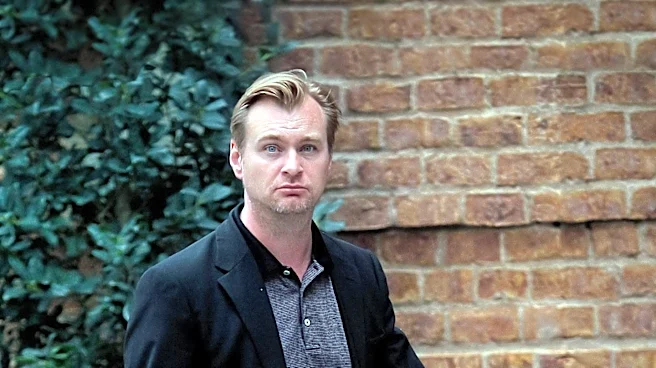
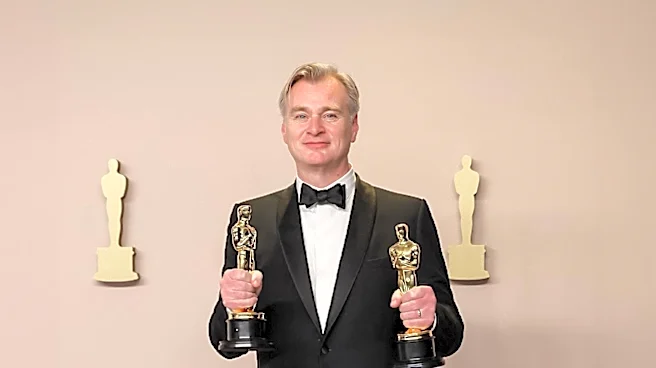
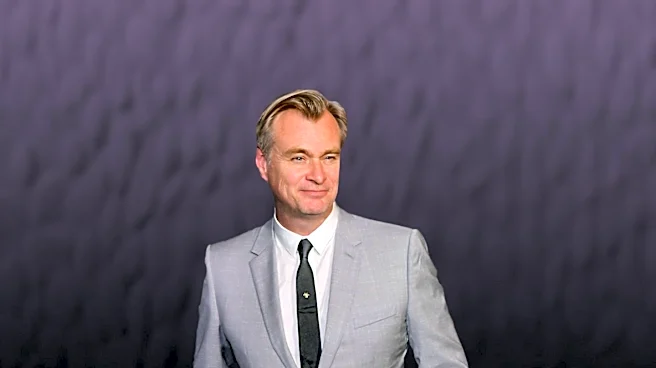
Christopher Nolan, a renowned filmmaker known for his work on films like 'Inception' and 'Memento,' has expressed his belief that Hollywood studios should embrace risk-taking in their blockbuster productions. In a recent interview, Nolan emphasized that playing
it safe in mainstream movies often fails to resonate with audiences who are eager for fresh and innovative content. He recounted his experience with 'Memento,' a film that initially faced challenges in finding a distributor due to its unconventional narrative structure. However, the film eventually found its audience, validating the risks taken. Nolan is currently working on his upcoming film 'The Odyssey,' which he describes as another project that takes significant creative risks. He hopes that, like his previous works, it will be well-received by audiences who appreciate originality.
Why It's Important?
Nolan's comments highlight a critical discussion within the film industry about the balance between commercial viability and creative innovation. As audiences become more discerning and seek unique storytelling experiences, studios face pressure to move beyond formulaic approaches. This push for originality could lead to a more diverse range of films, potentially revitalizing the industry and attracting a broader audience. For filmmakers, taking risks can distinguish their work and establish a unique voice in a crowded market. However, this approach also involves financial risks for studios and investors, who must weigh the potential for critical acclaim and audience engagement against the possibility of commercial failure.
What's Next?
As Nolan continues to advocate for risk-taking in filmmaking, it remains to be seen how Hollywood studios will respond. If 'The Odyssey' succeeds, it could encourage more studios to greenlight projects that prioritize creative storytelling over conventional formulas. This shift could lead to a new era of filmmaking where innovation is rewarded, potentially influencing other industries that rely on creative content. Stakeholders, including producers, directors, and investors, will likely monitor the film's reception closely to gauge the viability of similar projects in the future.