






What's Happening?
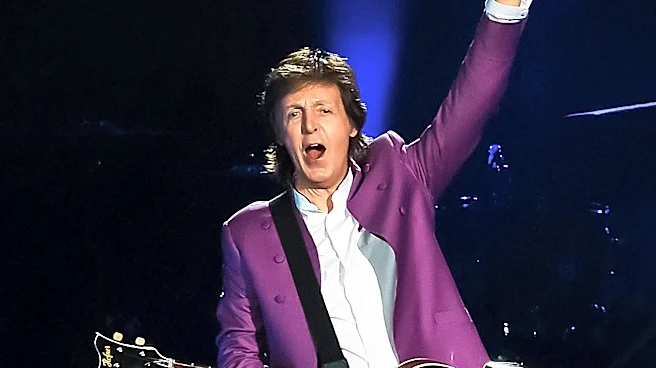
Paul McCartney's 1966 song 'Eleanor Rigby' is being highlighted as a significant turning point in his songwriting career, marking a shift from catchy tunes to compositions with genuine cultural impact. According to Far Out Magazine, McCartney himself
identified 'Eleanor Rigby' as the first song he wrote that felt 'important' rather than merely 'good.' The track, known for its intricate strings, vocals, and layering, is considered one of The Beatles' best and ranks among McCartney's top songs overall. Notably, McCartney composed the song line by line, starting with the iconic phrase, 'Look at all the lonely people,' which then guided the rest of the composition. This method of creation, where the song unfolded organically from an initial line, underscores the unique creative process behind one of his most complex and celebrated works.
Why It's Important?
The recognition of 'Eleanor Rigby' as a pivotal moment in Paul McCartney's career is important for understanding the evolution of popular music and songwriting. It highlights how artists can transition from creating commercially successful, danceable tracks to producing works that resonate on a deeper, cultural level. This shift influenced not only The Beatles' trajectory but also set a precedent for future musicians to explore more profound themes and complex arrangements within the pop genre. For music enthusiasts and aspiring songwriters, McCartney's approach to 'Eleanor Rigby' demonstrates that profound artistic creations can emerge from seemingly simple starting points, challenging the notion that complex music always requires meticulous pre-planning. The song's enduring legacy continues to inspire and influence contemporary artists, solidifying its place as a masterpiece that transcended typical pop music conventions.
What's Next?
The continued discussion and analysis of 'Eleanor Rigby' and its impact on Paul McCartney's songwriting may lead to further academic and critical examinations of his creative process and the broader evolution of music during the 1960s. Music historians and critics are likely to continue exploring how such pivotal songs influenced subsequent musical movements and artists. For fans, this renewed focus could spark interest in revisiting McCartney's extensive catalog, both with The Beatles and as a solo artist, to identify other moments of artistic transformation. Additionally, this emphasis on the song's organic creation might encourage contemporary songwriters to experiment with similar spontaneous compositional methods, potentially leading to new and innovative musical expressions.
Beyond the Headlines
Beyond its musical brilliance, 'Eleanor Rigby' delves into themes of loneliness and isolation, offering a poignant commentary on the human condition that remains relevant today. The song's narrative structure, focusing on individual characters and their unfulfilled lives, elevates it beyond a simple pop song to a piece of social commentary. This thematic depth, combined with its innovative musical arrangement, showcases McCartney's ability to blend artistic ambition with popular appeal. The fact that such a complex and emotionally resonant song originated from a single line, 'Look at all the lonely people,' speaks to the power of observation and empathy in artistic creation. It underscores how art can reflect and interpret societal experiences, providing a timeless connection with audiences across generations.