






What's Happening?
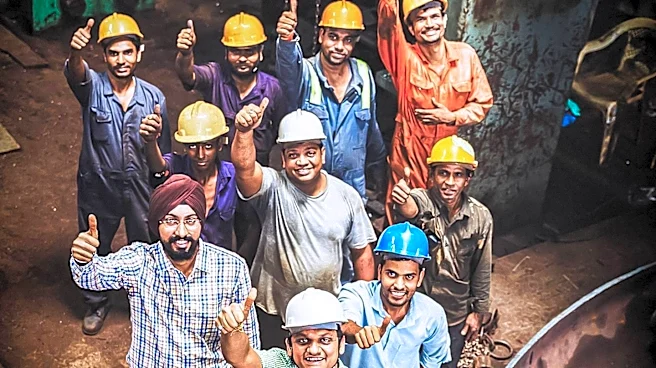
Domtar has announced the indefinite idling of its Howe Sound pulp mill and the Bayview Fibre chipping facility in Port Mellon, British Columbia. This decision will impact approximately 400 workers. The company cited ongoing challenges within the industry,
including tariffs, intense global competition, and a scarcity of fiber, as primary reasons for the closure. This move marks another significant setback for the pulp and paper sector in British Columbia, which has faced repeated difficulties in recent years. The Howe Sound mill is a substantial operation, and its closure represents a considerable loss of employment and industrial activity in the region. The indefinite nature of the idling suggests a lack of immediate plans for reopening, indicating a long-term impact on the affected workforce and local economy.
Why It's Important?
The indefinite idling of Domtar's Howe Sound pulp mill is significant due to its direct impact on approximately 400 workers and the broader implications for the Canadian forestry sector. This closure highlights the severe pressures faced by the pulp and paper industry, including global market dynamics and trade policies. For the affected workers, it means job loss and economic uncertainty, potentially leading to ripple effects in local communities dependent on the mill's operations. The decision also underscores the vulnerability of resource-based industries to external economic factors and supply chain issues. Furthermore, it could signal a trend of consolidation or contraction within the North American pulp industry, affecting regional economies and employment stability in similar industrial towns.
What's Next?
Following the indefinite idling of the Howe Sound pulp mill, the immediate next steps will likely involve support for the approximately 400 affected workers, potentially through severance packages, retraining programs, or job placement assistance. The local and provincial governments in British Columbia may also explore options to mitigate the economic impact on the communities of Port Mellon and the Sunshine Coast. For Domtar, the company will need to manage the logistics of shutting down operations and potentially reallocating resources or production capacity to other facilities. The broader industry will be watching to see if this closure is an isolated incident or indicative of further consolidation and challenges within the North American pulp and paper market, especially concerning fiber supply and global competition.
Beyond the Headlines
The indefinite idling of Domtar's Howe Sound pulp mill extends beyond immediate job losses, touching upon deeper economic and environmental considerations. Environmentally, the closure of a large industrial facility could lead to a temporary reduction in local industrial emissions, though the long-term environmental impact of such closures on regional ecosystems is complex. Economically, it highlights the ongoing struggle of traditional manufacturing sectors in developed nations against lower-cost global competitors and evolving trade landscapes. This event could also prompt a re-evaluation of industrial diversification strategies in resource-dependent regions, encouraging investment in new industries to build more resilient local economies. The social fabric of communities heavily reliant on single industries will also face significant strain, potentially leading to demographic shifts and increased demand for social services.