






What's Happening?
Waymo, Alphabet's autonomous driving subsidiary, has made its next-generation robotaxi, the Ojai, available to all riders in Los Angeles, Phoenix, and San Francisco. This marks a significant step in the company's strategy to scale its operations with
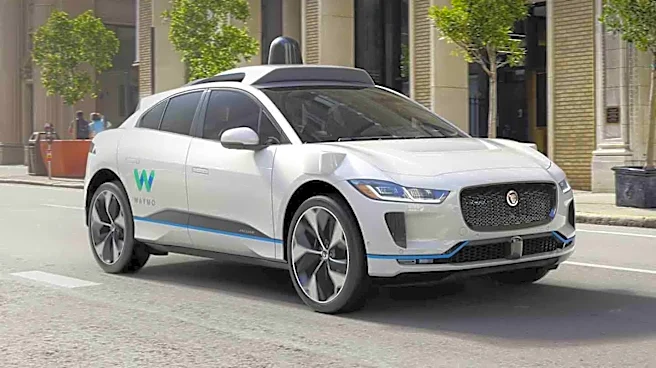
more cost-effective vehicles. Currently, customers in these cities may be assigned an Ojai when hailing a ride, with plans to allow riders to choose between the Ojai and the older Jaguar I-Pace robotaxi once more Ojais are integrated into the fleet. Waymo presently operates approximately 300 Ojai robotaxis in its commercial fleet. The company intends to further expand the Ojai's availability to Denver, Las Vegas, and San Diego later this year. The Ojai is built on Zeekr's SEA-M platform, a brand owned by China's Geely Holding Group, and is equipped with Waymo's sixth-generation self-driving system and Google's Gemini AI for in-car assistance.
Why It's Important?
This expansion is crucial for Waymo's long-term commercial viability and its ambition to achieve mass scale and profitability in the autonomous vehicle market. The Ojai's design focuses on being cheaper to build, operate, and maintain compared to previous models, which is essential for reducing operational costs and increasing accessibility for consumers. The integration of Waymo's modular sixth-generation self-driving system across various vehicle types signifies a strategic move towards greater flexibility and efficiency in deployment. Furthermore, the partnership with Zeekr for vehicle manufacturing highlights the global nature of the automotive supply chain and the complexities of international trade, particularly concerning tariffs on imported vehicles. The rapid pace of Ojai imports, with MoffettNathanson projecting 5,000 vehicles by the end of 2026, indicates an aggressive expansion strategy that could significantly impact the U.S. transportation sector by offering a new, potentially more affordable, mobility option.
What's Next?
Waymo plans to introduce the Ojai robotaxi to additional U.S. cities, including Denver, Las Vegas, and San Diego, later this year. As more Ojai vehicles are integrated into the fleet, riders will eventually have the option to select between the new Ojai and the existing Jaguar I-Pace models. The company's focus will likely remain on increasing the number of Ojais in its commercial fleet to achieve its projected target of 5,000 vehicles by the end of 2026. This expansion will involve continued logistical efforts to import and outfit the Zeekr-manufactured vehicles with Waymo's self-driving technology at its Arizona factory. The success of this rollout will be closely watched by competitors and investors, as it will demonstrate Waymo's ability to scale its operations and potentially overcome challenges related to tariffs and regulatory approvals in new markets.
Beyond the Headlines
The deployment of the Ojai robotaxi has broader implications for urban planning, public transportation, and the future of work in the U.S. The introduction of a cheaper, more accessible robotaxi service could lead to a reduction in private car ownership, alleviate traffic congestion, and lower transportation costs for consumers. However, it also raises questions about the impact on traditional taxi and ride-sharing industries, as well as the potential for job displacement among human drivers. The use of Google's Gemini AI as an in-car assistant points to the increasing integration of artificial intelligence into everyday services, enhancing user experience and potentially collecting valuable data for further development. The reliance on a Chinese manufacturer for the base vehicle also highlights geopolitical and economic considerations, including trade policies and supply chain resilience, which could influence future autonomous vehicle development and deployment strategies in the U.S.