








What's Happening?
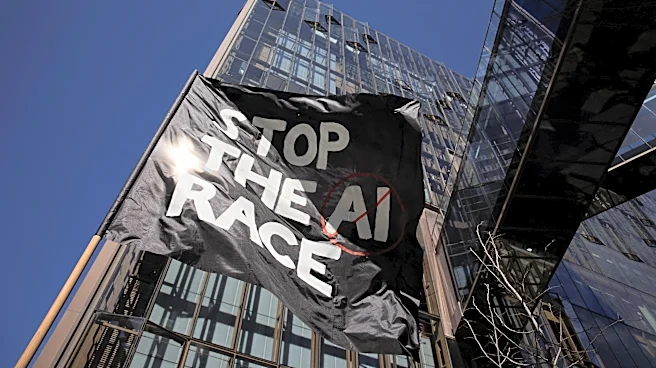
Nvidia CEO Jensen Huang recently expressed his disagreement with calls to slow down the development of Artificial Intelligence (AI). In an extended interview with CBS News' Jo Ling Kent, Huang discussed the exponential growth of AI and acknowledged industry
warnings about its power. However, he articulated a differing viewpoint regarding the pace at which AI development should proceed. This stance contrasts with other prominent figures in the AI industry, such as OpenAI's Sam Altman and Anthropic's Dario Amodei, who have advocated for a more cautious and slower approach to AI advancement, citing potential risks and the need for careful consideration.
Why It's Important?
Jensen Huang's position as the CEO of Nvidia, a leading company in AI hardware and a critical enabler of AI development, carries significant weight within the technology sector. His disagreement with slowing down AI development signals a potential divergence in strategy among key players in the industry. This difference in opinion could influence the direction of AI research, investment, and product development, potentially accelerating the pace of innovation in areas where Nvidia has a strong presence. For the U.S. technology industry, this stance could mean continued rapid advancements in AI capabilities, impacting various sectors from healthcare to autonomous systems. It also highlights the ongoing debate about the balance between innovation and caution in developing powerful technologies, with significant implications for economic competitiveness and national security.
What's Next?
The differing views among AI industry leaders, particularly between Jensen Huang and those advocating for a slowdown, are likely to fuel further discussions and debates within the technology community and among policymakers. Nvidia, under Huang's leadership, is expected to continue its aggressive pursuit of AI innovation, potentially leading to new breakthroughs in AI hardware and software. This could intensify competition within the AI sector, pushing other companies to maintain a rapid pace of development to keep up. Regulators and governments may also face increased pressure to establish clear guidelines and ethical frameworks for AI, as the industry itself remains divided on the optimal speed of progress. The ongoing dialogue will shape public perception of AI and influence future investment trends in the sector.
Beyond the Headlines
Huang's stance reflects a broader philosophical divide within the AI community regarding the nature of technological progress and human responsibility. His emphasis on continued, rapid development suggests a belief in the inherent benefits of AI and perhaps a confidence in humanity's ability to manage its risks as they emerge. This perspective contrasts with concerns about unforeseen consequences, ethical dilemmas, and the potential for AI to outpace human control. The debate also touches upon economic leadership, as the U.S. strives to maintain its competitive edge in AI globally. The pace of AI development has profound implications for job markets, societal structures, and even the definition of intelligence itself, making this a critical discussion that extends far beyond corporate strategies and into the fundamental questions of our technological future.