




What's Happening?
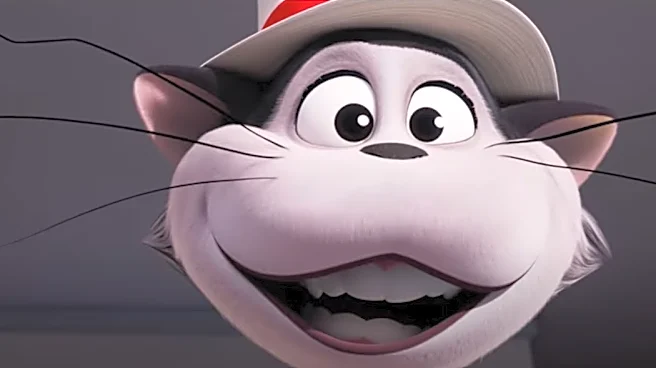
Warner Bros. Pictures is set to release a new feature-length animated film, 'The Cat in the Hat,' in 2026. Bill Hader will voice the titular character in this adaptation of Dr. Seuss's classic children's book. The film follows the Cat in the Hat as he attempts
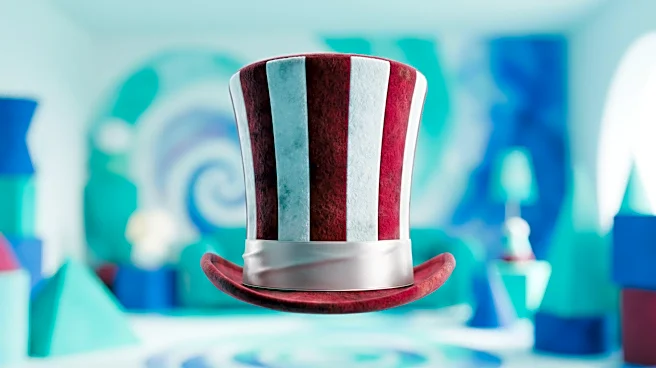
to cheer up two bored and homesick children, Gabby and Sebastian, who have recently moved to a new town. The plot involves the Cat losing his magical 'Go-Backer' device, which falls into one of three moving boxes that transform into wondrous universes. The Cat, Gabby, and Sebastian embark on a journey through these universes to retrieve the device. The film is directed by Alessandro Carloni and Erica Rivinoja and is rated PG for rude humor, mild language, action, and some peril. This animated version aims to distance itself from the 2003 live-action film and has been described as colorful, chaotic, and zany, with a tone more akin to 'Monsters Inc.' and Looney Tunes cartoons.
Why It's Important?
The release of a new animated 'The Cat in the Hat' by Warner Bros. Pictures is significant for the entertainment industry, particularly in the realm of family-friendly content and adaptations of beloved literary works. Dr. Seuss's 'The Cat in the Hat' is an iconic American children's book, and its cinematic adaptations often draw considerable public interest and scrutiny. This film represents Warner Bros.' continued investment in animated features and leveraging established intellectual property. The casting of Bill Hader, known for his comedic talent, as the voice of the Cat could attract a broader audience and potentially redefine the character for a new generation. The success or failure of this film could influence future decisions by major studios regarding the adaptation of classic children's literature, especially after the mixed reception of previous Dr. Seuss adaptations. It also highlights the ongoing trend of studios revisiting and reinterpreting popular stories for contemporary audiences, aiming to capture both nostalgic viewers and new fans.
What's Next?
Following its release in 2026, the performance of 'The Cat in the Hat' at the box office and with critics will be closely watched. The film's reception could dictate future animated projects from Warner Bros. Pictures, particularly those based on Dr. Seuss's works. If successful, it may pave the way for sequels or spin-offs, as hinted by on-screen references and the titular feline's line, 'Let’s go sequel!' during the credits. The film's ability to resonate with both children and adults will be a key factor in its long-term impact. Additionally, the critical reception of Bill Hader's portrayal of the Cat in the Hat could influence future voice casting decisions for other animated classics. The film's success could also encourage other studios to invest in high-quality animated adaptations of well-known children's books, potentially leading to a resurgence in such projects within the animation industry.
Beyond the Headlines
Beyond its immediate box office performance, this new adaptation of 'The Cat in the Hat' touches upon broader cultural and artistic implications. The decision to create an animated version, rather than another live-action film, reflects a strategic choice to align with the whimsical and surreal nature of Dr. Seuss's original work, which is often better conveyed through animation. The film's departure from the original book's simpler narrative to include elements like a corporate conglomerate for magical characters and a device that can tear reality apart, signifies a modern trend in children's entertainment to introduce more complex plots and higher stakes. This approach, while aiming to engage contemporary audiences, also raises questions about fidelity to source material and the evolving nature of storytelling for children. The film's emphasis on themes like the importance of family, the meaning of home, and true friendship, while common in children's movies, also reflects current societal values being reinforced through popular media.