





What's Happening?
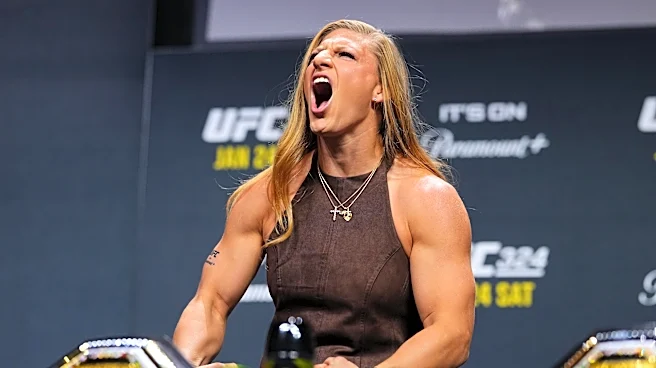
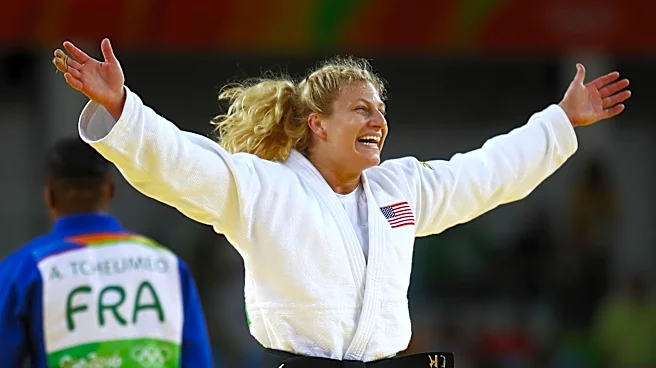
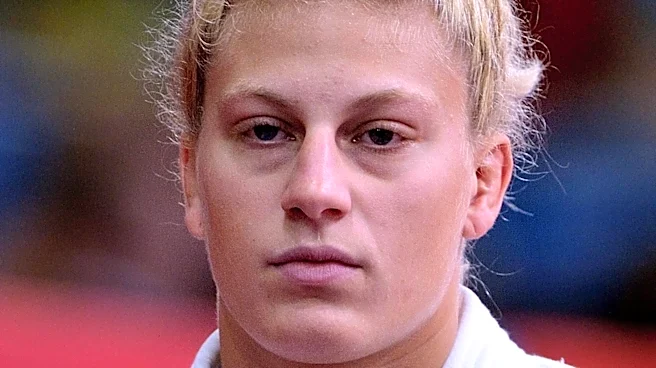
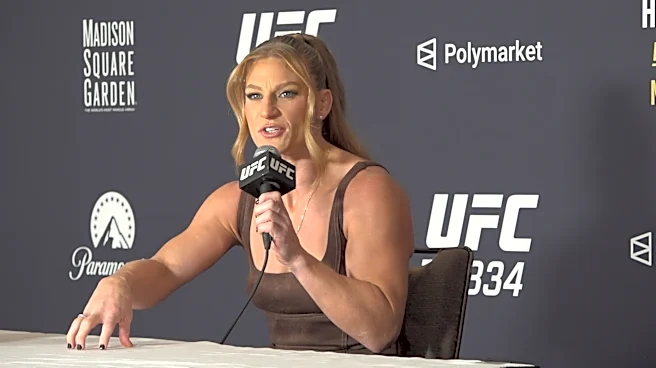
Kayla Harrison, the reigning UFC women's bantamweight champion, successfully made weight for her title defense against Amanda Nunes at UFC 334, but her appearance at the weigh-ins on November 13, 2026, sparked significant concern among fans. Many observers
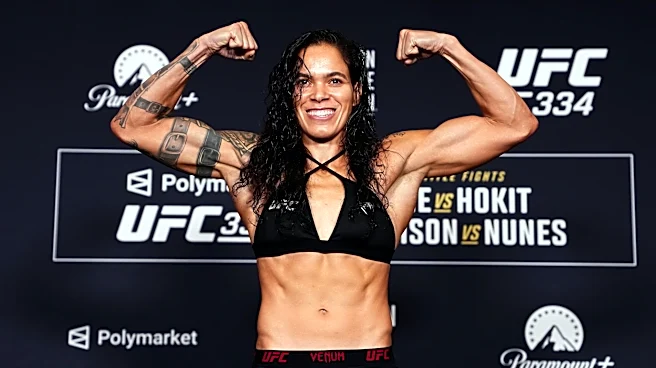
noted that Harrison looked 'emaciated' and 'drained,' with some social media comments describing her as looking 'like a corpse.' This extreme weight cut to 135 pounds is a recurring challenge for Harrison, who previously competed at 155 pounds in the PFL. This fight marks Harrison's return to competition after neck surgery earlier in 2026. While Nunes has also been sidelined for three years, she appeared healthy and rejuvenated at her weigh-in. The stark contrast in their appearances has led to speculation about Harrison's condition and its potential impact on her performance in the upcoming fight.
Why It's Important?
The widespread concern over Kayla Harrison's appearance at the UFC 334 weigh-ins is important because it highlights the severe physical toll of extreme weight cutting in mixed martial arts. Such drastic weight loss can significantly impact a fighter's performance, endurance, and overall health, potentially jeopardizing their safety in the Octagon. For Harrison, who is returning from neck surgery, the added stress of a difficult weight cut could be particularly detrimental. This situation also raises questions about the long-term sustainability of fighters competing in divisions that require such extreme measures. The public reaction underscores a growing awareness and concern among fans and analysts regarding fighter welfare, potentially influencing future discussions about weight class regulations and medical oversight within the sport. If Harrison's performance is visibly affected, it could reignite debates about the ethics and safety of current weight-cutting practices.
What's Next?
The immediate next step is the UFC 334 co-main event on November 14, 2026, where Kayla Harrison will face Amanda Nunes. All eyes will be on Harrison's performance to see if her challenging weight cut and recent neck surgery have any discernible impact on her fighting ability. Regardless of the fight's outcome, the concerns raised by her weigh-in appearance are likely to persist. Post-fight, there will undoubtedly be discussions about Harrison's future in the bantamweight division and whether a move to a higher weight class, such as 145 pounds, would be more appropriate for her health and performance. The UFC and athletic commissions may also face renewed pressure to review and potentially revise weight-cutting protocols to ensure fighter safety, especially for athletes who consistently struggle to make weight.
Beyond the Headlines
The public reaction to Kayla Harrison's weigh-in appearance extends beyond the immediate fight, touching upon broader issues within combat sports regarding athlete health and the culture of extreme weight cutting. The practice, often referred to as 'killing oneself' to make weight, is a long-standing and controversial aspect of MMA. This incident could serve as a catalyst for more stringent regulations or increased medical monitoring during weight cuts. It also highlights the psychological pressure on athletes to compete in specific weight classes, even when it compromises their well-being. The visual evidence of Harrison's struggle could contribute to a shift in public perception and industry standards, potentially leading to reforms aimed at prioritizing fighter safety over competitive advantages gained through drastic weight manipulation. This situation underscores the ethical dilemmas inherent in a sport where physical extremes are often part of the competitive landscape.