





What's Happening?
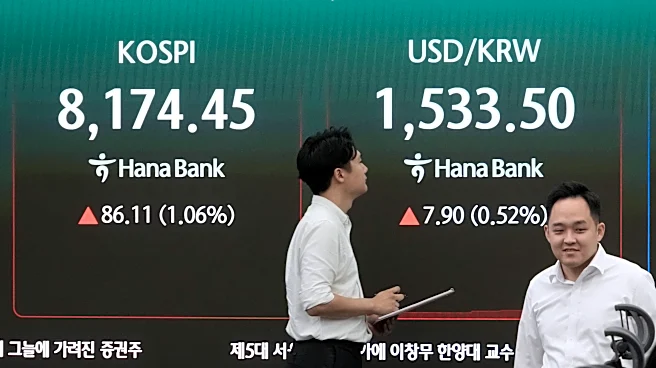
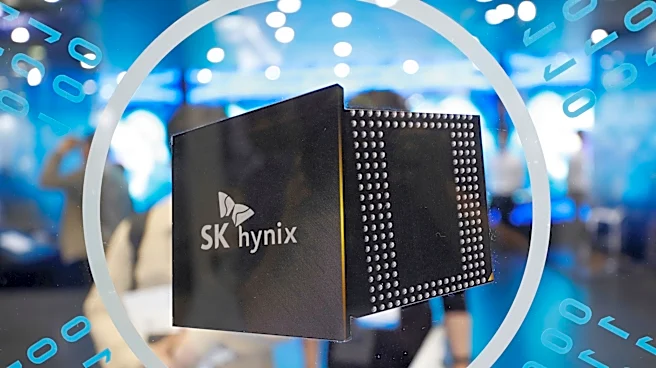
SK Hynix, a South Korean memory-chip maker, experienced a significant drop in its share price, falling over 10% in Seoul on Monday. This decline followed a strong debut on the Nasdaq, where the company's shares surged by 13% on Friday. The initial rise
was driven by strong interest from U.S. investors in AI-related semiconductor stocks. However, the subsequent drop is attributed to profit-taking and uncertainties regarding the valuation of the U.S.-listed shares compared to the Korean stock. Analysts have noted that the American Depositary Receipt (ADR) debut has set a new benchmark for evaluating the company's valuation. The sell-off is also seen as a result of additional share issuance, which increased the stock supply available to investors. Despite the current volatility, experts believe that the structural demand for AI memory chips will continue to support SK Hynix's stock in the long term.
Why It's Important?
The fluctuation in SK Hynix's share price highlights the volatile nature of the semiconductor market, particularly in the context of AI-driven demand. The company's performance is a reflection of broader trends in the tech industry, where AI applications are driving significant investment and interest. The initial surge in SK Hynix's shares underscores the strong appetite for AI-linked stocks, while the subsequent decline points to the challenges of accurately valuing such investments amid rapid technological advancements. This situation also illustrates the complexities of cross-border stock listings and the impact of additional share issuance on market dynamics. For investors, the developments around SK Hynix serve as a reminder of the importance of risk management and the need to balance enthusiasm for emerging technologies with prudent investment strategies.
What's Next?
Looking ahead, SK Hynix's stock is expected to stabilize as the market adjusts to the new supply of shares and investors reassess the company's valuation in light of ongoing AI demand. Analysts predict that the structural demand for AI memory chips will continue to outpace supply, potentially driving the stock higher over the next six to twelve months. The company's performance will likely be closely watched by investors and industry stakeholders, as it could provide insights into the broader trends in the semiconductor market and the evolving landscape of AI technology. Additionally, the response of other AI hardware companies to similar market dynamics will be of interest, as they navigate the challenges and opportunities presented by the growing demand for AI applications.