





What's Happening?
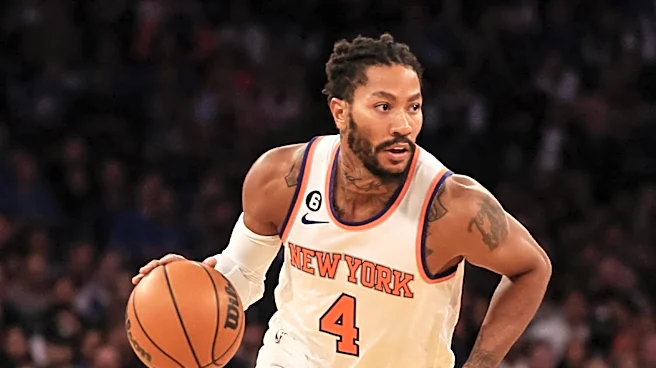
Former NBA star Derrick Rose has voiced a poignant concern that future generations of basketball fans may not remember his career, despite his historic achievements. Rose, who became the youngest MVP in NBA history at 22 in 2011, led the Chicago Bulls
to the league's best record that season and an Eastern Conference Finals appearance. His rapid ascent followed a Rookie of the Year award and an All-Star selection, drawing comparisons to basketball legends. However, a series of devastating injuries, including an ACL tear in 2012 and multiple meniscus tears, significantly altered the trajectory of his career. In an interview with Sports Illustrated, Rose stated, "The way my story went, they’re not going to remember me," drawing parallels to how younger fans might not know about historical figures like Wilt Chamberlain or Bill Russell. He hopes that if his story is discovered, it will be through genuine curiosity, and that he will be remembered for playing hard and being a winner.
Why It's Important?
Derrick Rose's reflection on his legacy highlights the transient nature of fame and recognition in professional sports, particularly in an era of constant new talent and evolving narratives. His concern resonates deeply because he represents a 'what if' story in NBA history—a player whose unparalleled potential was curtailed by injuries. This sentiment underscores the emotional toll that such career-altering events can have on athletes, even those who achieved significant milestones. It also prompts a broader discussion about how sports history is preserved and consumed by new audiences. For fans who witnessed his peak, Rose's impact was profound, inspiring a city and challenging the league's established order. His admission serves as a reminder that even the most impactful careers can fade from collective memory without deliberate efforts to recount and appreciate their significance.
What's Next?
While Rose's playing career has largely concluded, his comments may spark renewed interest in his story and legacy among basketball analysts, historians, and fans. Documentaries, retrospectives, and fan discussions could emerge to ensure his contributions are not forgotten. His perspective might also influence how current and former athletes approach their own legacies, potentially leading to more active engagement in preserving their narratives. For the NBA, it could serve as a subtle prompt to highlight the careers of players whose impact extended beyond their statistical longevity, especially those whose stories are marked by both triumph and adversity. The ongoing conversation around Rose's place in basketball history will likely continue to evolve as new generations discover his remarkable, albeit truncated, peak.
Beyond the Headlines
Rose's candid admission delves into the psychological aspect of an athlete's identity and self-worth, particularly after a career-defining injury. It touches upon the human desire for lasting recognition and the struggle to reconcile a brilliant but brief peak with a longer, less dominant period. This narrative extends beyond sports, reflecting a universal human experience of grappling with one's place in history and the fear of being forgotten. Ethically, it raises questions about how sports media and fans remember and celebrate athletes, particularly those whose careers are impacted by factors beyond their control. Culturally, Rose's story is a powerful testament to resilience and the enduring spirit of competition, even when faced with immense physical challenges. His legacy, regardless of future recognition, remains a significant chapter in NBA history, embodying both the exhilarating highs and the heartbreaking lows of professional sports.