





What's Happening?
A new interior design trend, known as 'color drenching,' is gaining traction, advocating for the elimination of traditional white baseboards. Instead, baseboards are painted the same color as the walls, a technique designers say makes rooms appear larger.
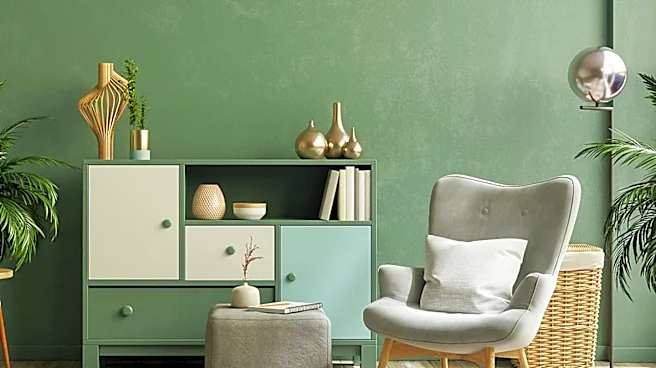
This approach is part of a broader movement where walls, trim, and sometimes even ceilings share a single color shade. According to Diana Almeida, co-founder and head designer at CoolAIid, and architect Beril Yilmaz of By Design & Viz, a white baseboard creates a hard visual line that the eye follows, effectively shrinking the perceived space. By matching the baseboard color to the walls, visual breaks are minimized, allowing the eye to move fluidly across the wall and drawing attention to furniture, windows, or fireplaces rather than the room's perimeter. This method is particularly effective in smaller living rooms and hallways, where visual continuity can significantly impact spatial perception.
Why It's Important?
This design shift is important for homeowners and interior design professionals seeking cost-effective ways to enhance spatial perception without structural changes. The trend offers a simple yet impactful solution for making smaller U.S. homes and apartments feel more expansive, addressing a common desire for open and airy living spaces. For the paint and home decor industries, this trend could influence product development and marketing strategies, potentially increasing demand for specific paint finishes or color palettes that facilitate color drenching. It also challenges long-standing design conventions, encouraging a reevaluation of how architectural elements like baseboards contribute to a room's overall aesthetic and perceived size. Homeowners stand to gain from a more cohesive and sophisticated interior look, while designers can offer innovative solutions to clients struggling with limited space.
What's Next?
The adoption of color drenching is expected to continue, with more homeowners and designers experimenting with this technique. Paint manufacturers may see an increased demand for specific color lines that are conducive to whole-room application, including trim. Interior design publications and online platforms will likely feature more examples and tutorials on implementing color drenching, further popularizing the trend. While white trim remains suitable for neutral, traditional, or whole-house schemes, the shift towards color-matched baseboards suggests a growing preference for seamless and visually uninterrupted interiors. Homeowners considering this trend will need to carefully select paint colors, considering factors like lighting and existing furniture, to achieve the desired effect of an enlarged and cohesive space.
Beyond the Headlines
Beyond its immediate aesthetic appeal, the color drenching trend reflects a broader cultural shift towards minimalist design and the optimization of living spaces. In an era where urban living often means smaller residences, innovative design solutions that maximize perceived space are highly valued. This trend also highlights the psychological impact of color and visual lines on human perception, demonstrating how subtle changes in interior finishes can profoundly alter how a space is experienced. Ethically, it promotes a more thoughtful approach to design, encouraging individuals to consider the holistic impact of their choices rather than adhering to outdated conventions. The emphasis on fewer visual breaks aligns with principles of simplicity and flow, contributing to a calmer and more harmonious living environment.