
What's Happening?
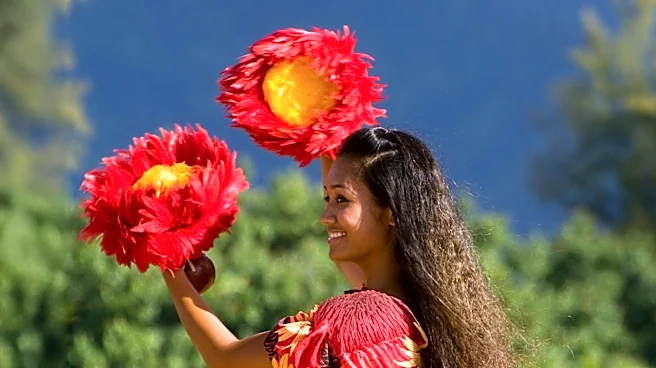
Hawaiian music is characterized by a rich and evolving tradition that seamlessly blends ancient roots with global influences. Historically, mele (poetry and chant) served as the primary method for preserving
Hawaiian history, genealogies, and sacred stories, accompanied by traditional percussive instruments like the ipu, pahu, 'uli'uli, and pu'ili. Over centuries, as the islands welcomed diverse cultures, Hawaiian musicians integrated new elements. The 19th century saw the introduction of stringed instruments, leading to the development of the slack-key guitar (kī hō'alu), the ukulele, and the Hawaiian steel guitar, invented by Joseph Kekuku. These innovations, encouraged by Hawaiian royalty like King Kalākaua and Queen Lili'uokalani, demonstrate the dynamic and expansive nature of Hawaiian musical expression.
Why It's Important?
The continuous evolution of Hawaiian music highlights its resilience and adaptability as a cultural art form. The integration of foreign instruments and musical styles, rather than diminishing indigenous traditions, led to a 'golden age of acoustic innovation.' This process created unique musical forms that became iconic symbols of Hawaiian culture, such as the ukulele and the steel guitar, which significantly influenced genres like country music, blues, and pop recordings across the American mainland. This cultural exchange demonstrates how local traditions can absorb and transform global influences to create something distinct and globally impactful, ensuring the preservation and continued relevance of Hawaiian identity through music. It also underscores the importance of cultural exchange in enriching artistic landscapes.
What's Next?
The ongoing dialogue between traditional Hawaiian music and global art forms suggests a future where contemporary local artists will continue to honor ancient roots while exploring genres like jazz, pop, reggae, and classical composition. This synthesis ensures that the musical identity of O'ahu and the broader Hawaiian islands remains vibrant and constantly evolving. Institutions like the Hawai'i Symphony Orchestra play a crucial role by programming contemporary local works alongside classical European symphonies, fostering a continuous tradition of storytelling through sound. The preservation of Hawaiian music will continue through active practice, mentorship, and community participation, with cultural practitioners passing down the art of chant, instrument crafting, and slack-key styling to younger generations.
Beyond the Headlines
Beyond its melodic and rhythmic structures, Hawaiian music embodies a profound connection to history, culture, and the natural world. The use of mele as an archival system highlights the power of oral tradition and the intricate relationship between language, poetry, and historical record-keeping. The instruments, crafted from natural materials, further emphasize this connection to the environment. The story of Hawaiian music also reflects broader themes of cultural resilience and identity in the face of globalization. It demonstrates how a culture can maintain its essence while embracing external influences, transforming them into unique expressions that resonate both locally and internationally. This ongoing process of adaptation and innovation ensures that Hawaiian music remains a living, breathing narrative of its people and their islands.