









What's Happening?
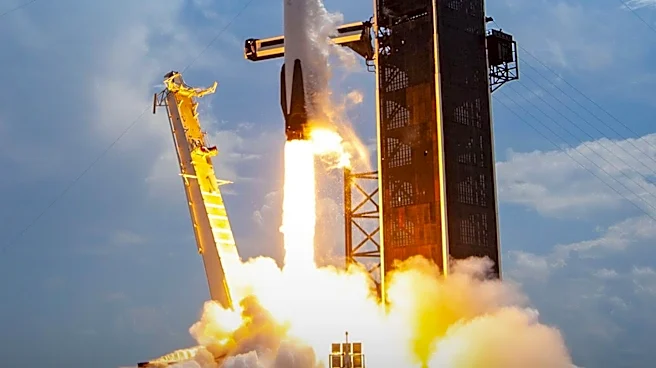
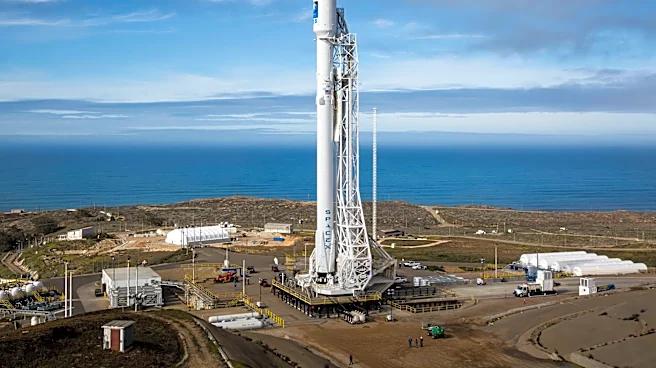
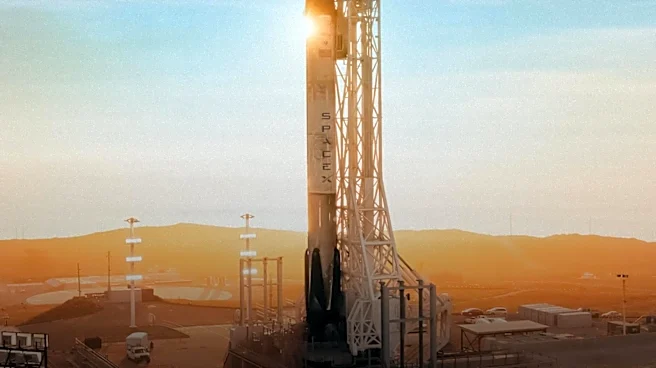
SpaceX is preparing for two significant launches this week. On July 7, 2026, the company will launch the Transporter 17 rideshare mission from Vandenberg Space Force Base in California. This mission will carry a variety of small satellites for commercial
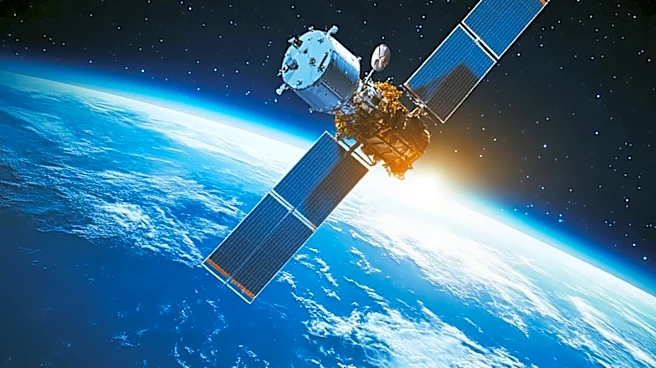
and government clients. The Falcon 9 rocket used for this mission is expected to land on the droneship 'Of Course I Still Love You' in the Pacific Ocean. Following this, on July 9, SpaceX will launch the Starlink Group 10-42 mission from Cape Canaveral Space Force Station in Florida. This mission aims to add more satellites to SpaceX's broadband internet constellation, with the Falcon 9 booster targeting a landing on the droneship 'A Shortfall of Gravitas'. These launches are part of SpaceX's ongoing efforts to expand its satellite network and enhance global internet connectivity.
Why It's Important?
The upcoming launches are crucial for SpaceX's strategy to expand its satellite internet service, which aims to provide global broadband coverage. The Transporter 17 mission supports the growing demand for satellite deployment by offering rideshare opportunities to various clients, thereby fostering innovation and development in the satellite industry. The Starlink mission, on the other hand, is a step towards achieving SpaceX's goal of creating a comprehensive satellite network that can deliver high-speed internet to remote and underserved areas. This expansion could significantly impact global internet accessibility, potentially reducing the digital divide and offering new opportunities for economic growth and development.
What's Next?
Following these launches, SpaceX will continue to focus on increasing the capacity and reach of its Starlink constellation. The company plans to conduct more frequent launches to deploy additional satellites, enhancing the network's coverage and reliability. As the constellation grows, SpaceX may face regulatory challenges and competition from other satellite internet providers. The success of these missions could also influence future collaborations and contracts with commercial and government entities seeking satellite deployment services.