







What's Happening?
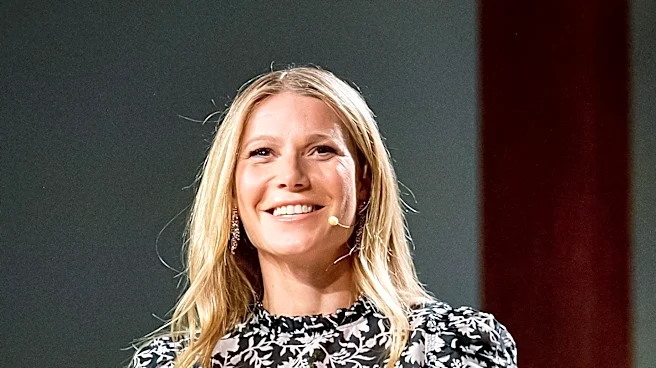
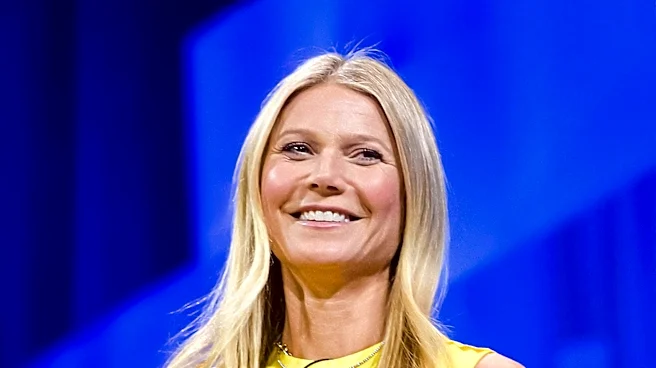
Gwyneth Paltrow has recently discussed the origins of the widely publicized term 'conscious uncoupling' used during her 2014 divorce from Coldplay frontman Chris Martin. Speaking on the 'Friends Keep Secrets' podcast, Paltrow explained that the concept
emerged from a desire to prioritize their children, Apple and Moses, and avoid the familial friction she observed in other divorced households. She and Martin consulted a therapist who introduced them to the idea, leading to a commitment to maintain a family unit despite their separation as a couple. Paltrow recounted asking friends from divorced families about their worst experiences, learning that ongoing tension between parents, rather than the divorce itself, caused the most lasting pain. This insight motivated her and Martin to actively work towards a harmonious post-divorce relationship for their children's well-being, including efforts like regular family brunches.
Why It's Important?
Paltrow's explanation sheds light on the evolving landscape of divorce and co-parenting in contemporary society. The 'conscious uncoupling' approach, while initially met with public scrutiny and even ridicule, represents a deliberate effort to redefine traditional divorce narratives. It highlights a growing societal emphasis on minimizing the negative impact of separation on children by fostering cooperative parental relationships. This approach can influence public perception of divorce, encouraging more amicable and child-centric resolutions. For families navigating separation, it offers a model that prioritizes long-term family well-being over adversarial proceedings. The public discussion around 'conscious uncoupling' also underscores the broader cultural shift towards open conversations about mental health and therapeutic interventions in personal relationships, even during challenging transitions like divorce.
What's Next?
The continued discussion of 'conscious uncoupling' by public figures like Gwyneth Paltrow is likely to further normalize and popularize the concept of amicable divorce and co-parenting. This could lead to increased demand for therapeutic services focused on family mediation and post-divorce adjustment. Legal frameworks and family court systems might also see a gradual shift towards encouraging more collaborative divorce processes, potentially reducing contentious litigation. For individuals considering or undergoing divorce, Paltrow's narrative could serve as an example, prompting them to explore similar strategies for maintaining family cohesion. The ongoing conversation may also inspire more research into the long-term psychological and social benefits of such approaches for children of divorced parents.
Beyond the Headlines
Beyond the immediate context of celebrity divorce, the 'conscious uncoupling' phenomenon touches upon deeper societal values regarding family structure and personal responsibility. It challenges the traditional notion of divorce as a complete severing of ties, instead proposing a more fluid and adaptable family model. This approach implicitly advocates for emotional intelligence and proactive communication in navigating complex personal relationships, even when they evolve beyond their initial form. The public's initial strong reaction to the term also reveals underlying societal discomfort with redefining conventional relationship milestones. Ultimately, 'conscious uncoupling' reflects a broader cultural movement towards greater intentionality and well-being in all aspects of life, including the often-difficult process of marital dissolution.