





What's Happening?
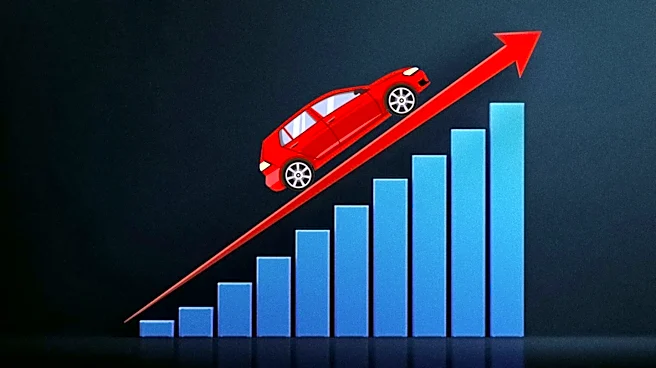
The average price of a new vehicle in the U.S. has reached a record high of $51,974 as of June, surpassing the previous peak set in July 2023. This increase represents a 4.9% rise from the same period last year, according to the Automotive News/Catalyst
IQ Vehicle Price and Inventory Tracker. Despite the rising costs, consumer demand for new vehicles remains robust. The data indicates a shift in consumer preferences towards smaller and more fuel-efficient vehicles. Notably, compact sedans have seen the largest price increase among vehicle segments, while convertibles have experienced the most significant price decline. The Kia Telluride and Toyota RAV4 have seen substantial price hikes, while the Hyundai Ioniq 5 has seen a price drop due to the expiration of federal EV tax incentives.
Why It's Important?
The sustained demand for new vehicles despite record-high prices highlights a significant shift in consumer behavior and market dynamics. This trend suggests that consumers are prioritizing specific vehicle features, such as fuel efficiency and technology, over cost. The increase in vehicle prices also reflects broader economic factors, including tariffs on imported vehicles and changes in consumer preferences. This situation presents challenges for budget-conscious consumers and may influence automakers' production strategies, potentially leading to a focus on more profitable, higher-end models. The automotive industry must navigate these changes while balancing consumer demand and economic pressures.
What's Next?
As vehicle prices continue to rise, automakers may need to adjust their strategies to cater to changing consumer preferences. This could involve increasing the production of smaller, more fuel-efficient vehicles or enhancing the features of entry-level models to justify higher prices. Additionally, the expiration of federal EV tax incentives may impact the pricing and demand for electric vehicles. Stakeholders, including policymakers and industry leaders, will need to consider these factors when planning future automotive and economic policies.