





What's Happening?
Liberty Gold has completed a Feasibility Study for its Black Pine Oxide Gold Project located in Idaho, U.S., revealing an after-tax net present value (NPV) of US$2.4 billion, equivalent to $3.32 billion. The study projects a 60.5% internal rate of return
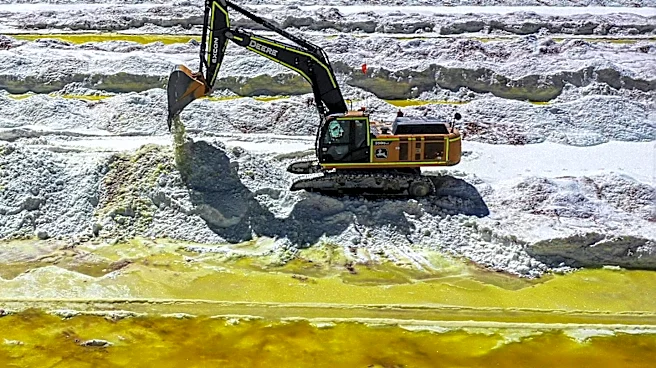
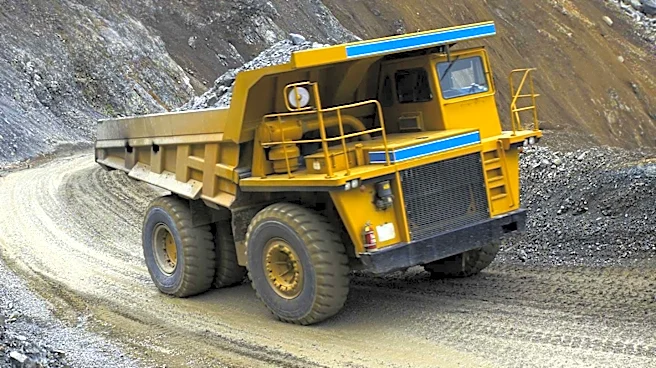
and a two-year payback period, based on a gold price of US$3,250 per ounce, with an initial capital investment of US$411.4 million. The Black Pine project is designed as a conventional open-pit, run-of-mine heap leach operation with an estimated mine life of 16 years. It is expected to produce an average of 176,700 ounces of payable gold annually, with production rising to 202,000 ounces per year during its first five years of operation. The project is supported by a probable mineral reserve of 433.3 million tonnes grading 0.29 grams per tonne gold, totaling 4.04 million ounces. Life-of-mine gold recovery is estimated at 70.2%, and all-in sustaining costs are forecast at US$1,566 per ounce.
Why It's Important?
This significant gold project in Idaho represents a substantial economic development for the U.S. mining sector and the local economy. The estimated US$3.32 billion valuation and projected 16-year mine life indicate a long-term source of employment and economic activity in the region. For the U.S. mining industry, it signifies a boost in domestic gold production, potentially reducing reliance on foreign sources and enhancing national resource security. The project's substantial internal rate of return and quick payback period make it an attractive investment, potentially drawing further capital into the U.S. mining sector. Local communities stand to benefit from job creation, infrastructure development, and increased tax revenues. However, large-scale mining operations also bring environmental considerations, which will be a key focus during the ongoing permitting process. The project's success could also influence future investment decisions in other U.S. mineral-rich regions, contributing to the overall growth of the domestic mining industry.
What's Next?
Following the completion of the Feasibility Study, Liberty Gold's immediate focus is on preparing the Black Pine project for execution. This includes detailed engineering, planning, and other activities necessary to support execution readiness and a potential construction decision. The project is currently progressing through federal and state permitting as a FAST-41 Covered Project, indicating a streamlined review process. The U.S. Forest Service initiated the preparation of an environmental impact statement in April, which is a critical step for regulatory approval. Detailed engineering work has already commenced with M3 Engineering and Technology and NewFields Companies. The project benefits from existing infrastructure, including established road access, available grid power, and secured water rights, which should facilitate its development. Future steps will involve securing all necessary permits, finalizing financing, and making a definitive construction decision, with potential for operations to begin in the coming years.
Beyond the Headlines
The Black Pine project's development extends beyond its immediate economic impact, touching upon broader themes of resource management and environmental stewardship in the U.S. The project's designation as a FAST-41 Covered Project highlights governmental efforts to expedite critical infrastructure and resource development, balancing economic needs with regulatory oversight. The environmental impact statement process will be crucial in addressing concerns related to land use, water quality, and wildlife, setting precedents for future mining projects in environmentally sensitive areas. The project's reliance on conventional open-pit and heap leach methods underscores the ongoing debate about the environmental footprint of traditional mining techniques versus more sustainable practices. Furthermore, the historical context of previous mining operations at Black Pine, which produced 434,800 ounces of gold between 1991 and 1997, provides valuable insights into the long-term ecological and economic legacy of such ventures in the region. This project will serve as a case study for balancing resource extraction with environmental protection and community engagement.