

What's Happening?
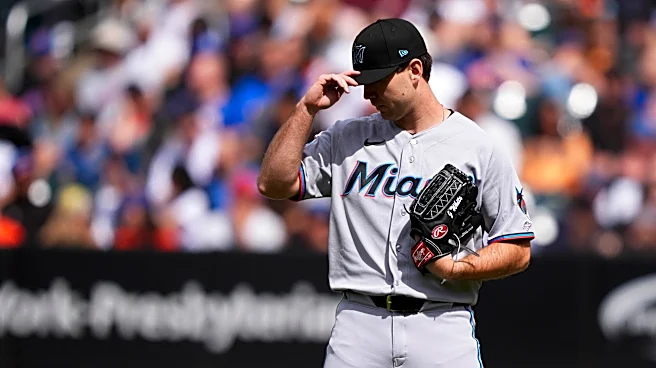
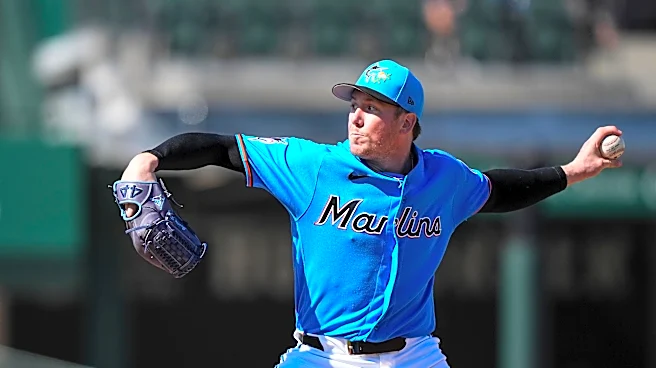
In 2016, pitcher Luis Castillo was part of a trade between the Miami Marlins and the San Diego Padres. Initially, Castillo, along with RHP Jarred Cosart, RHP Carter Capps, and 1B Josh Naylor, was sent to the Padres. This transaction was in exchange for
RHP Andrew Cashner, RHP Colin Rae, and RHP Tayron Guerrero. However, the trade was subsequently restructured. Following RHP Colin Rae experiencing right elbow issues after his single start with the Marlins, Castillo was returned to the Marlins on August 1, 2016, in exchange for Rae. This event occurred during Castillo's minor league career, where he was recognized as the Marlins Minor League Pitcher of the Year and Florida State League Pitcher of the Year, among other accolades, for his performance across Class A Jupiter and Class AA Jacksonville.
Why It's Important?
This restructured trade highlights the complexities and potential risks involved in professional sports transactions, particularly concerning player health and performance. For the Marlins, the return of Luis Castillo proved to be a significant long-term asset, as he later developed into a prominent Major League pitcher, earning multiple All-Star selections. Conversely, the Padres' initial acquisition of Castillo, followed by his return due to another player's injury, underscores the unpredictable nature of player evaluations and the impact of unforeseen circumstances on team roster development. Such events can influence future trade negotiations, leading teams to implement more stringent medical evaluations or conditional clauses in their agreements to mitigate similar risks. The involvement of a promising prospect like Josh Naylor in the initial deal also indicates the high stakes and strategic considerations teams undertake to acquire talent.
What's Next?
While this specific trade occurred in 2016, its implications for how teams approach player acquisitions continue to resonate. Moving forward, professional baseball organizations are likely to maintain or enhance their due diligence processes, especially regarding the physical condition of players involved in trades. This could lead to more detailed medical disclosures and potentially more conditional trades where the final terms are dependent on a player's health or performance post-trade. For players, it emphasizes the importance of maintaining health and consistent performance, as their value can fluctuate rapidly based on such factors. The incident also serves as a historical case study for general managers and front office personnel when evaluating the long-term value and risks associated with trading prospects versus established players.
Beyond the Headlines
The restructuring of the Luis Castillo trade due to Colin Rae's injury touches upon broader ethical and legal considerations within professional sports. It raises questions about the responsibility of teams to disclose player health information accurately and the mechanisms in place to address situations where such information changes or is found to be incomplete post-trade. While not explicitly detailed in the source, such scenarios can lead to disputes and renegotiations, highlighting the contractual intricacies of player movement. Furthermore, the event underscores the human element in sports business, where careers can be significantly altered by injuries and subsequent trade adjustments. It also subtly points to the development pathways of young talent like Castillo and Naylor, illustrating how minor league performance can quickly elevate a player's profile and make them valuable assets in high-stakes transactions.