






What's Happening?
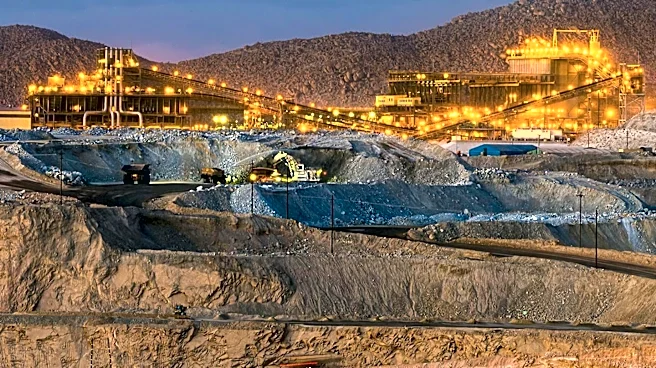
Newmont, a major mining company, has estimated that the development of its proposed Red Chris copper-gold block cave project in British Columbia, Canada, will require between US$4.2 billion and US$4.8 billion in capital. This estimate sets the financial
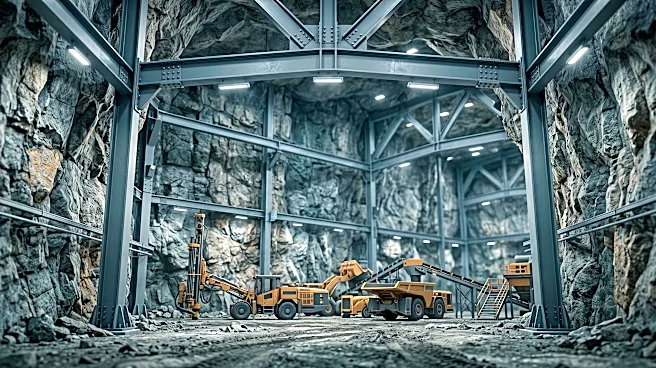
benchmark for an investment decision anticipated in early 2027. The figure covers the entire joint-venture project, includes contingency, and accounts for an expected C$500 million contribution from the Canadian government. However, it excludes costs associated with the transition from open-pit mining to underground operations. Newmont holds a 70% stake in Red Chris, with Imperial Metals owning the remaining 30%. The feasibility study for the project is nearing completion and is currently under review. A final investment decision has not yet been made. If approved by Newmont and the joint-venture board, construction is projected to commence in 2027, with commercial production targeted for 2033. The project is expected to have an initial cave life of 13 years, producing approximately 3 million ounces of gold and over 850,000 tonnes of copper.
Why It's Important?
This significant capital estimate for the Red Chris project is crucial for evaluating the economic viability of a large-scale underground mining development. The distinction between development capital and transition spending highlights that the headline figure does not represent the full financial commitment required for the project's conversion from open-pit to underground operations. This could impact the overall cost assessment and profitability for Newmont and Imperial Metals. The project's timeline, with commercial production targeted for 2033, positions Red Chris as a potential future source of copper and gold in the next decade, rather than an immediate solution to current supply demands. The dual-metal output profile of gold and copper will contribute to revenue, but the absence of detailed operating costs or valuation assumptions makes it challenging to fully assess the project's potential return on investment. The project's progression is also a testament to the collaboration between mining companies and indigenous governments, as evidenced by the June 2026 permit approvals involving the Tahltan Central Government, which enabled the proposed transition.
What's Next?
The immediate next step for the Red Chris project is the completion of its feasibility study and subsequent review. This will be a substantive milestone, providing a clearer basis for Newmont and Imperial Metals to evaluate the development scope, schedule, and economics. The coming months will determine if the project's development case supports committing funds within the announced capital range. The most decisive event will be the expected full-funds investment decision in early 2027. Until this approval, the US$4.2 billion to US$4.8 billion estimate defines the scale of the decision, not an authorized build. Should the investment be approved, construction is slated to begin in 2027, leading towards commercial production by 2033. Stakeholders, including investors, the Canadian government, and the Tahltan Central Government, will be closely watching the outcome of the feasibility review and the final investment decision, as it will dictate the future of this significant mining venture and its potential impact on regional employment and economic activity.
Beyond the Headlines
The Red Chris project's substantial capital requirement and long development timeline underscore the inherent challenges and long-term nature of large-scale mining investments. The exclusion of transition costs from the headline capital estimate suggests a more complex financial picture than initially presented, potentially leading to higher overall expenditures. This highlights the importance of comprehensive financial planning in major infrastructure projects, especially those involving significant operational shifts. Furthermore, the project's reliance on a Canadian government contribution and the involvement of the Tahltan Central Government in the permitting process illustrate the increasing role of public-private partnerships and indigenous engagement in resource development. This trend reflects a broader societal expectation for mining operations to not only be economically viable but also environmentally responsible and socially equitable. The project's future success will depend not only on market prices for copper and gold but also on effective risk management, stakeholder collaboration, and the ability to navigate complex regulatory and social landscapes over an extended period.