






What's Happening?
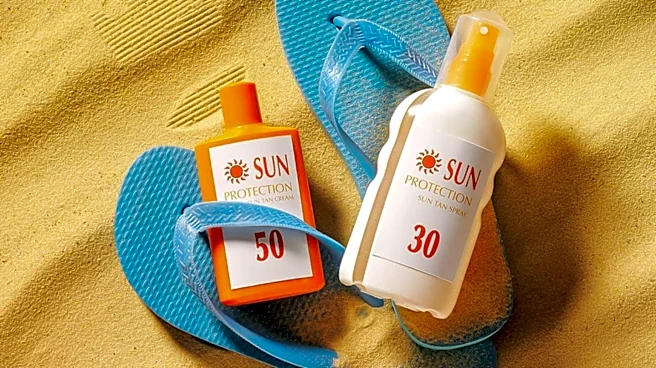
SPF sunsticks are gaining popularity as a convenient and mess-free option for sun protection, particularly favored by hikers, commuters, and travelers due to their portability and ease of reapplication. These solid-format sunscreens fit easily into various
bags and are TSA-friendly, making them ideal for on-the-go use. They are also beneficial for individuals who dislike the greasy residue often associated with traditional liquid sunscreens. However, a key challenge with sunsticks is that users frequently apply less than the recommended amount, which can lead to a lower real-world SPF than indicated on the product label. To achieve the stated protection, multiple deliberate passes are often required. Despite this, sunsticks provide a practical solution for reapplying sunscreen, even over makeup, without causing mess or requiring significant time.
Why It's Important?
The rise of SPF sunsticks reflects a growing consumer demand for practical and efficient personal care products, particularly within the travel and outdoor recreation sectors. For U.S. consumers, this trend offers enhanced convenience in maintaining sun protection, which is crucial for preventing skin damage and reducing the risk of skin cancer. The ease of reapplication can lead to more consistent sunscreen use, especially among active individuals or those who spend extended periods outdoors. However, the discrepancy between labeled SPF and real-world application highlights a public health concern. If consumers are not adequately protected due to insufficient application, they remain vulnerable to UV radiation, potentially undermining the product's intended benefit. This underscores the importance of consumer education regarding proper application techniques to maximize the effectiveness of sunsticks and ensure adequate protection.
What's Next?
Manufacturers of SPF sunsticks may focus on developing formulations that provide more robust protection with less product, or design applicators that encourage more thorough coverage. Educational campaigns from health organizations and dermatologists are likely to emphasize proper application techniques for sunsticks, advising consumers on how to achieve the labeled SPF. This could involve clearer instructions on product packaging or public service announcements. The market may also see an increase in hybrid products that combine the convenience of a stick with enhanced coverage or visible indicators to ensure sufficient application. As travel and outdoor activities continue to be popular, the demand for innovative and user-friendly sun protection methods like sunsticks is expected to grow, prompting further advancements in product design and consumer guidance.
Beyond the Headlines
The widespread adoption of SPF sunsticks points to a broader cultural shift towards integrating health and wellness into daily routines with minimal disruption. The preference for mess-free and portable options suggests that convenience is a significant driver in consumer choices for personal care. This trend also highlights the ongoing challenge of balancing product innovation with effective public health messaging. While sunsticks offer a practical solution, the potential for under-application raises questions about consumer understanding of SPF efficacy and the responsibility of brands to ensure their products deliver on their promises in real-world scenarios. This could lead to increased scrutiny from regulatory bodies regarding labeling and usage instructions for sun protection products, aiming to bridge the gap between perceived and actual protection.