








What's Happening?
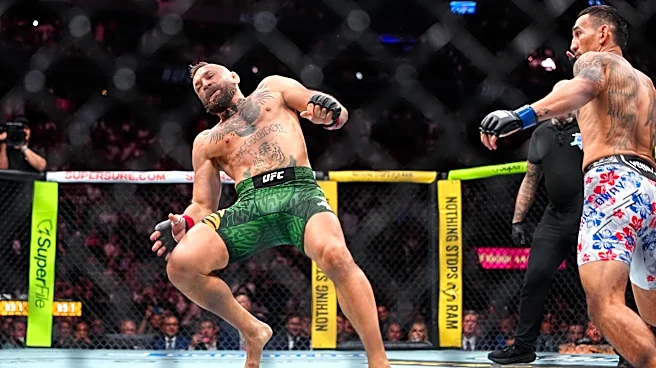
Conor McGregor has publicly denied allegations that he entered his UFC 329 fight against Max Holloway with a pre-existing injury. The fight, which marked McGregor's return to the Octagon after a five-year hiatus, ended abruptly when McGregor appeared
to suffer a knee injury just 1:09 into the first round. The injury occurred as McGregor attempted a flying kick, leading to speculation among fans and observers that he may have been less than fully fit before the fight. McGregor addressed these rumors, stating that the injury 'came out of nowhere' and that he was 'sharp and ready' for the bout. Despite the setback, McGregor expressed his intention to compete again, although the severity of his knee injury could impact his future plans.
Why It's Important?
The incident is significant as it raises questions about McGregor's future in the UFC, given his history of injuries and the fact that he has only fought four times since 2018. His star power and ability to draw large audiences are undeniable, but repeated injury-related stoppages could undermine his value as a headline fighter. The UFC, led by Dana White, may need to reassess McGregor's role in future events, especially if his recovery from the knee injury is prolonged. This situation also highlights the physical demands and risks associated with professional fighting, where even seasoned athletes like McGregor are vulnerable to sudden injuries.
What's Next?
Looking ahead, McGregor had previously mentioned an April 2027 date for his next fight, but this timeline is now uncertain due to his knee injury. The UFC will likely monitor his recovery closely to determine his readiness for future bouts. Additionally, the organization may need to consider alternative headliners if McGregor's injury proves to be a long-term issue. Fans and stakeholders will be watching closely to see how McGregor's situation unfolds and whether he can return to form in the competitive landscape of the UFC.