







What's Happening?
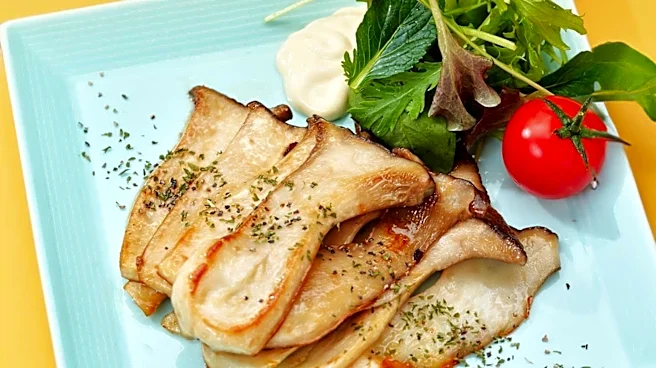
King oyster mushrooms are being highlighted as a versatile and ideal substitute for vegan scallops due to their meaty, earthy, and nutty flavor, as well as their unique size and texture. These mushrooms, which are the largest variety of oyster mushrooms, can
grow up to eight inches long and two inches in diameter. When cut crosswise, their thick white stems can be sliced to visually resemble scallops. While plant-based fish and seafood alternatives often lack the traditional 'fishy' smell or taste, methods exist to infuse king oyster mushrooms with a scallop-like flavor. This involves steaming or soaking them in salted water to impart an ocean-like taste, followed by pan-frying with ingredients such as vegan butter, vegetable broth, white wine, and minced garlic or shallots. For those desiring a more authentic seafood flavor, additions like crumbled nori, minced kelp, white miso paste, MSG, or vegan oyster/fish sauce can be used.
Why It's Important?
The increasing popularity of king oyster mushrooms as a vegan scallop alternative signifies a growing trend in the U.S. food industry towards innovative plant-based options. This development caters to a rising consumer demand for sustainable and ethical food choices, particularly among vegans, vegetarians, and those looking to reduce their seafood consumption. The ability to mimic the texture and, with specific flavoring techniques, the taste of scallops using a readily available mushroom expands culinary possibilities and makes plant-based diets more appealing. This trend can impact the market for traditional seafood, potentially shifting consumer preferences and encouraging further investment in plant-based food technology. For businesses, offering such alternatives can attract a broader customer base and align with corporate sustainability goals, while for consumers, it provides diverse and healthy dining options.
What's Next?
The continued innovation in plant-based seafood alternatives, exemplified by king oyster mushrooms, suggests a future where more diverse and convincing substitutes will become mainstream. Food manufacturers and restaurants are likely to further explore and refine techniques for replicating the sensory experiences of various seafood types using plant-based ingredients. This could lead to an expansion of vegan seafood products in grocery stores and on restaurant menus across the U.S. Research into other plant-based ingredients that can mimic seafood textures and flavors is also anticipated. As consumer awareness and demand for sustainable and plant-based options grow, the market for these alternatives is expected to expand, potentially influencing agricultural practices to support the cultivation of suitable plant ingredients.
Beyond the Headlines
The emergence of king oyster mushrooms as a vegan scallop alternative reflects a broader cultural and ethical shift in food consumption. It highlights a growing consciousness about environmental sustainability, animal welfare, and personal health. This trend challenges traditional culinary norms and encourages a re-evaluation of what constitutes 'seafood.' The focus on replicating the experience of seafood without using animal products also points to the ingenuity within the plant-based food sector. This movement could lead to a redefinition of gourmet dining, where plant-based dishes are not merely substitutes but celebrated culinary creations in their own right. Furthermore, it underscores the potential for plant-based foods to address global food security concerns and reduce the ecological footprint associated with conventional fishing practices.