

What's Happening?
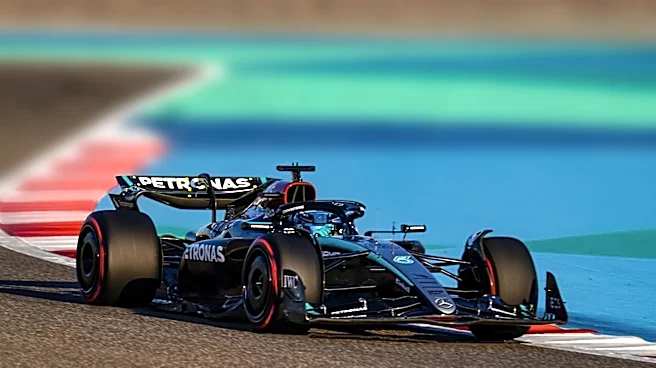
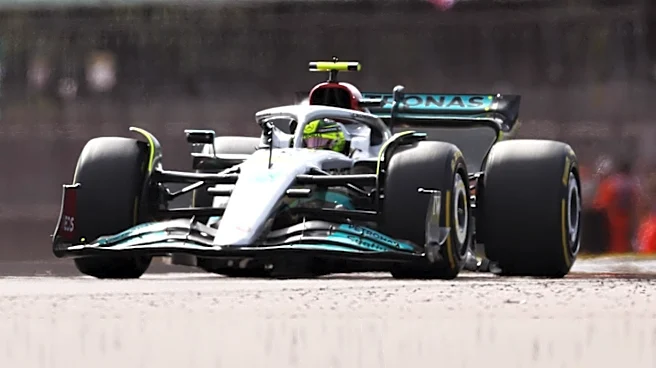
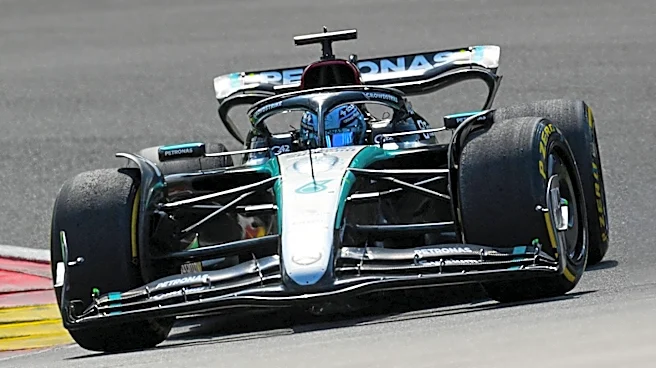
The Hungarian Grand Prix saw Mercedes driver Kimi Antonelli secure a third-place finish, despite starting further back on the grid. The team employed a two-stop strategy, which allowed Antonelli to gain a tyre life advantage and move into podium contention.
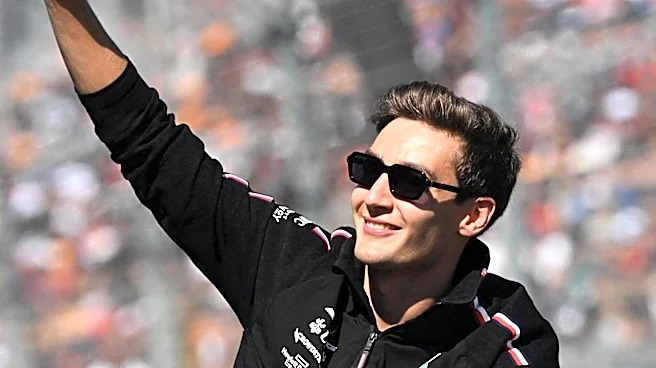
However, a Virtual Safety Car period reduced this advantage, bringing Lewis Hamilton close behind. Antonelli managed to defend his position successfully. Meanwhile, George Russell faced challenges after an anti-stall issue at the start dropped him to the back of the field, but he recovered to finish seventh. Mercedes remains focused on improving reliability and performance as they lead both championships heading into the summer break.
Why It's Important?
Mercedes' performance at the Hungarian Grand Prix highlights the team's strategic prowess and resilience in the face of challenges. Securing a podium finish despite starting further back demonstrates their ability to adapt and optimize race strategies. The issues faced by George Russell underscore the importance of addressing technical reliability to maintain competitive standings. As Mercedes leads both championships, their focus on continuous improvement and reliability will be crucial in maintaining their position and achieving their championship goals in the second half of the season.
What's Next?
Mercedes will use the summer break to analyze their performance and address technical issues, particularly those affecting George Russell. The team aims to return stronger for the second half of the season, focusing on reliability and strategic improvements. With both championships in sight, Mercedes will continue to push for development and performance enhancements to secure their lead. The upcoming races will test their ability to maintain momentum and adapt to evolving competition dynamics.