






What's Happening?
Smart Home Systems, led by founder and president Tiziano Iannitelli, specializes in designing and integrating luxury home technology solutions across New Jersey, New York, and South Florida. With nearly three decades of experience, Iannitelli's approach
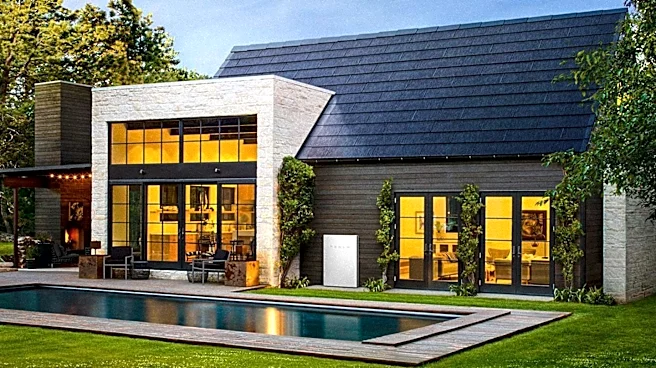
focuses on ensuring technology enhances a home's beauty, functionality, and lifestyle without disrupting its design. The company offers customized solutions including lighting control, motorized shades, whole-home audio, security systems, climate control, and AI-powered automation. Iannitelli, who has a background in architecture, prioritizes understanding a homeowner's routines and lifestyle to develop tailored plans that improve convenience while maintaining architectural integrity. This often involves replacing traditional wall switches with smart keypads, concealing thermostats, and integrating speakers invisibly into walls and ceilings. Smart Home Systems collaborates early in the design process with architects, builders, interior designers, and landscape architects to ensure technology supports the overall architectural vision.
Why It's Important?
The philosophy of 'designing the invisible' in smart home technology, as championed by Smart Home Systems, is becoming increasingly important in the U.S. luxury housing market. As smart home devices become more ubiquitous, the demand for seamless integration that doesn't compromise aesthetic appeal is growing. This approach caters to a segment of U.S. homeowners who seek advanced technological conveniences without the visual clutter often associated with multiple gadgets. The company's focus on early collaboration with design professionals highlights a shift in the construction and renovation industries, where smart home integration is no longer an afterthought but a fundamental aspect of architectural planning. This trend could influence building codes, design standards, and consumer expectations across the U.S., pushing developers and designers to consider technology as an intrinsic part of a home's infrastructure. Furthermore, the emphasis on personalized solutions, rather than pre-packaged offerings, reflects a broader consumer desire for bespoke experiences in the luxury market, impacting how technology providers approach customization and client engagement.
What's Next?
Smart Home Systems is actively exploring the evolving role of artificial intelligence in creating more intuitive living environments, including voice-controlled systems that understand natural conversation and advanced automation that responds seamlessly to daily routines. There is also growing interest in wellness-focused technology, such as lighting systems that mimic natural daylight patterns to enhance comfort. These advancements suggest a future where smart homes in the U.S. will become even more responsive and personalized, moving beyond basic automation to anticipate and adapt to residents' needs. The company's commitment to industry best practices and long-term client service, as recognized by its HTA Luxury Certified integration firm status, indicates a continued focus on professionalism and quality in the rapidly expanding smart home sector. This could lead to higher standards for smart home integrators across the U.S., with an increased emphasis on technical expertise, customer support, and ethical considerations in technology deployment.
Beyond the Headlines
The 'invisible' integration of smart home technology raises deeper implications regarding the relationship between technology, design, and human experience in U.S. homes. By making technology less visible, companies like Smart Home Systems are subtly reshaping how individuals interact with their living spaces, fostering an environment where technology serves as an intuitive extension of the home rather than a collection of separate devices. This approach can contribute to a sense of calm and order, reducing the cognitive load associated with managing multiple systems. Ethically, it prompts questions about data privacy and security, as more integrated systems collect and process personal information. Culturally, it reflects a growing desire for simplicity and elegance in an increasingly complex world, where technology is expected to blend seamlessly into daily life. The long-term shift could see smart home technology becoming so ingrained in architectural design that it becomes an invisible utility, much like plumbing or electricity, fundamentally altering how homes are conceived, built, and experienced in the U.S.