










What's Happening?
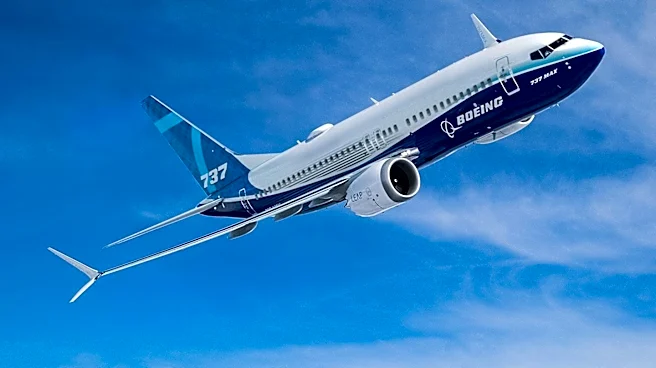
WestJet, a Canadian airline, is set to lease its first Boeing 737 Max 10 by the end of the year under a lease agreement with Aviation Capital Group. The airline plans to take delivery of 13 Max 10 aircraft from the lessor, with firm orders for an additional
60 and options for 25 more. Despite the anticipated delivery, the aircraft is unlikely to enter service before 2027 due to certification delays from the Federal Aviation Administration and Transport Canada. Boeing's certification of the Max 10 is expected later this year, following the certification of the 737 Max 7. The Max 10 has faced delays due to the twin 737 Max crashes in 2018 and 2019 and the COVID-19 pandemic.
Why It's Important?
The introduction of the Boeing 737 Max 10 is significant for WestJet and the broader aviation industry as it represents a major fleet expansion and modernization effort. The delays in certification and service entry highlight ongoing challenges in the aviation sector, particularly in regulatory approvals and safety assurances following past incidents. For WestJet, the new aircraft could enhance operational efficiency and expand route offerings, potentially increasing competitiveness. The broader industry impact includes a ripple effect on other airlines awaiting their Max 10 deliveries, such as Delta and United, which could influence market dynamics and fleet strategies.
What's Next?
WestJet and other airlines are likely to continue monitoring the certification process closely, with potential adjustments to their fleet and operational plans based on regulatory timelines. The aviation industry will be watching Boeing's progress in certifying the Max 10, as it could set a precedent for future aircraft certifications. Airlines may also need to strategize around potential delays, including adjusting schedules and capacity planning. Stakeholders, including regulatory bodies and airline executives, will play crucial roles in navigating these developments.