






What's Happening?
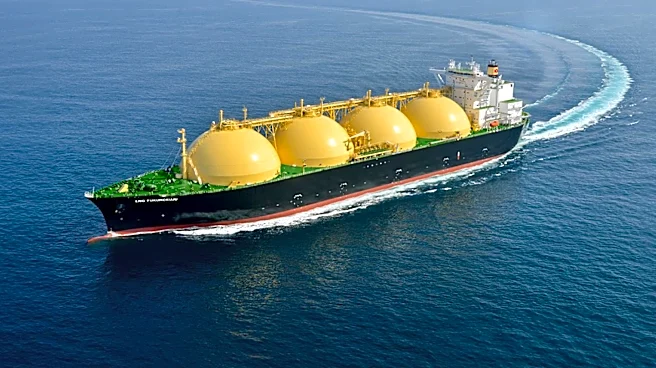
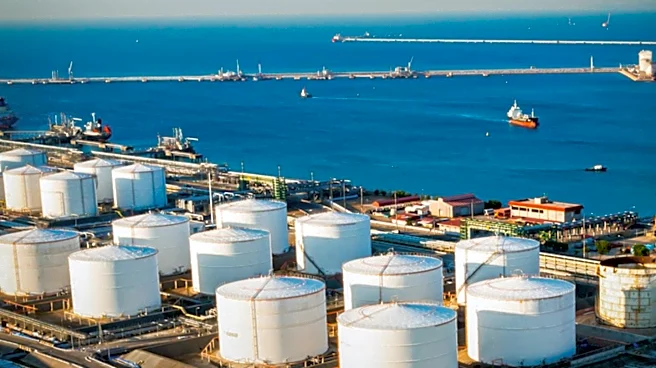
A federal appeals court has affirmed the Federal Energy Regulatory Commission's (FERC) approval of Venture Global's CP2 liquefied natural gas (LNG) export terminal and its associated 91-mile CP Express pipeline in Louisiana. The D.C. Circuit Court of Appeals
rejected challenges from environmental groups, ruling that FERC complied with federal law when it authorized the construction in 2025. Senior Judge Douglas Ginsburg, writing for the court, noted that the challengers alleged numerous errors under the Natural Gas Act (NGA) and the National Environmental Policy Act (NEPA), but the court found these claims improbable. This decision allows the massive LNG export terminal and pipeline project to proceed, despite opposition from environmental organizations concerned about its impact.
Why It's Important?
This ruling is significant for the U.S. energy sector, particularly for the natural gas industry and its export capabilities. The approval of the CP2 LNG terminal and pipeline reinforces the federal government's commitment to expanding natural gas infrastructure, which is crucial for meeting domestic and international energy demands. For Louisiana, the project represents substantial economic investment and job creation. However, for environmental groups, the decision is a setback, as it allows for the construction of a large-scale fossil fuel project that they argue contributes to climate change and local environmental degradation. The court's upholding of FERC's compliance with NEPA and NGA also provides a precedent for future energy infrastructure projects facing similar environmental challenges, potentially streamlining the approval process for other developments.
What's Next?
With the D.C. Circuit Court of Appeals upholding FERC's approval, Venture Global can proceed with the construction of the CP2 LNG terminal and the CP Express pipeline. While environmental groups may explore further legal avenues, such as an appeal to the Supreme Court, the current ruling significantly strengthens the project's legal standing. The focus will now shift to the actual construction phase and the project's integration into the existing energy infrastructure. This development is likely to encourage other companies planning similar LNG export facilities, potentially leading to an increase in natural gas infrastructure projects across the Gulf Coast. The decision also highlights the ongoing tension between energy development and environmental protection, a debate that will continue to shape U.S. energy policy.
Beyond the Headlines
The D.C. Circuit's decision extends beyond the immediate approval of the CP2 LNG terminal, touching upon the broader interpretation of environmental laws in the context of energy infrastructure. The court's finding that FERC adequately addressed environmental concerns under NEPA and NGA could influence how federal agencies conduct environmental reviews for large-scale projects. This case underscores the legal complexities involved in balancing economic development, energy security, and environmental stewardship. It also reflects the persistent challenges faced by environmental advocates in halting projects deemed critical for national energy strategy. The long-term implications could include a more robust legal framework for defending energy projects against environmental lawsuits, potentially accelerating the development of fossil fuel infrastructure, while also intensifying calls for more stringent environmental regulations and judicial oversight from opposing groups.