




What's Happening?
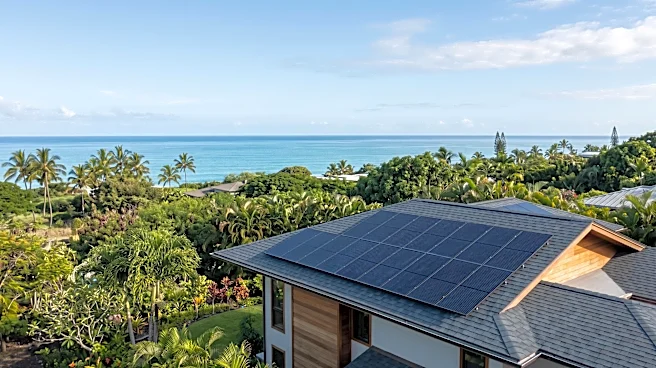
Hawai'i families with significant wealth, often tied to real estate, are encountering increasing complexities in managing their assets across generations. Historically, wealth accumulation in Hawai'i differed from the Mainland, with portfolios heavily
weighted towards land, commercial properties, and family businesses rather than primarily stocks and bonds. While these assets have appreciated substantially, this growth has introduced new challenges. Property values are higher, ownership structures are more intricate, and operating costs have risen. Furthermore, family members are often geographically dispersed, and younger generations may hold different views on risk and investment. The core issue has shifted from merely preserving assets to ensuring the family's capacity to effectively manage these assets through structured stewardship.
Why It's Important?
The evolving landscape of wealth management in Hawai'i has significant implications for economic stability and intergenerational equity. Without proper stewardship, the substantial real estate holdings of these families could face fragmentation, mismanagement, or forced sales, potentially impacting local economies and land use patterns. The challenge of transferring knowledge, responsibility, and decision-making authority is critical to prevent the erosion of family wealth over time. Effective wealth stewardship ensures that assets continue to contribute to the local economy, support philanthropic endeavors, and provide for future generations. Conversely, a failure to adapt to these complexities could lead to economic instability for individual families and broader community impacts, including changes in property ownership and local business dynamics.
What's Next?
Hawai'i families are increasingly exploring structured approaches like family offices to address these challenges. These structures aim to coordinate investments, taxes, legal frameworks, risk management, philanthropy, and, crucially, family decision-making. While the concept of a family office is not new globally, its recognition and adoption are growing in Hawai'i as families realize they are already performing many of these functions without formal structures. The next steps involve families establishing clear governance models, defining investment strategies, resolving disagreements, and preparing the next generation for leadership roles. This may involve setting up single-family offices, utilizing multi-family offices, or appointing trusted advisors to integrate various professional services. The goal is to build an institutional framework around the wealth, ensuring its longevity and effective management.
Beyond the Headlines
The shift towards structured wealth stewardship in Hawai'i reflects deeper societal and economic transformations. It highlights the tension between traditional family values, often centered on land retention, and the demands of modern financial management. The increasing geographical dispersion of family members and differing generational perspectives on wealth underscore a broader cultural evolution. This situation also brings to light ethical considerations regarding the responsibility of wealth holders to their communities and future generations. The emphasis on transferring knowledge and decision-making capacity, rather than just assets, points to a recognition that true legacy extends beyond monetary value to include wisdom, values, and the ability to adapt. This evolution in wealth management is not just about finances but about preserving family identity and purpose in a changing world.