







What's Happening?
Dogecoin experienced a daily price range of 4.19 percent on October 29, 2026, with its price fluctuating between a high of $0.080673 and a low of $0.077427. Despite this significant intraday movement, the cryptocurrency closed with a minimal change of minus
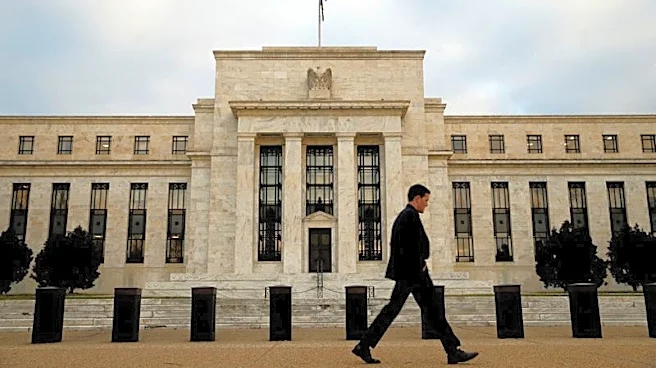
0.10 percent over 24 hours, trading at $0.0790. This indicates a day of considerable volatility without a clear directional trend. The market value of Dogecoin stood at $12.36 billion, ranking it 12th among crypto assets, with a daily turnover of $457.7 million. This price action occurred in the context of the U.S. Federal Reserve's decision on October 28, 2026, to maintain its policy rate target range at 3.75 to 4.00 percent, a decision that confirmed the existing monetary policy rather than introducing a change. This environment often leads to market repositioning by large traders without establishing a definitive trend.
Why It's Important?
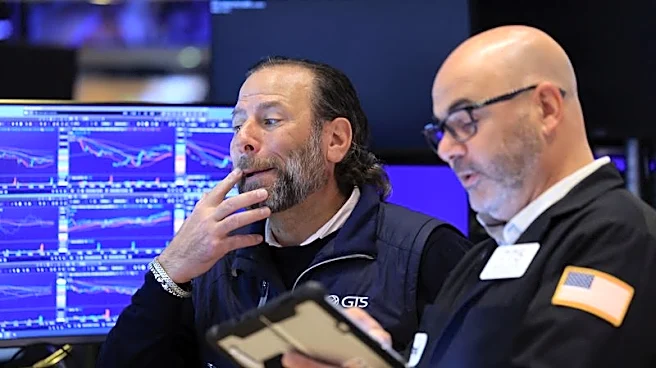
The substantial daily range in Dogecoin's price, despite a flat 24-hour close, highlights the inherent volatility and complex dynamics of the cryptocurrency market. For traders, this wide range means that stop-loss orders set too tightly could be triggered prematurely, leading to losses even if the price eventually recovers to its original level. This scenario underscores the importance of understanding intraday price movements beyond just the opening and closing figures. The market's reaction to the Federal Reserve's unchanged interest rate decision suggests that while major policy shifts can drive trends, the absence of such shifts can still lead to significant intraday price swings due to factors like leveraged positions, order book depth, and month-end repositioning by large traders. This environment can be particularly challenging for retail investors who might misinterpret a flat daily percentage change as a lack of market activity, overlooking the substantial price fluctuations within the day.
What's Next?
In the immediate future, Dogecoin's price action will likely continue to be influenced by factors such as leveraged market dynamics, order book depth, and broader market sentiment. Traders will need to carefully consider their stop-loss levels, anchoring them to measured daily ranges rather than arbitrary percentages to avoid premature exits. The market will also be watching for any significant shifts in trading volume or large institutional movements that could signal a new trend. With two trading days remaining until the end of October, the cryptocurrency's monthly performance, which currently shows a loss of around 16 percent, will be finalized. A break above the daily high of $0.080673 could indicate renewed buying interest, while a drop below the daily low of $0.077427 or the 65-day low of $0.0750 could signal further downward pressure. The market's reaction to these key levels will be crucial in determining Dogecoin's short-term direction.
Beyond the Headlines
The phenomenon of wide daily price ranges with minimal net change, as observed in Dogecoin, reveals deeper structural aspects of modern financial markets, particularly in the cryptocurrency sector. It highlights how market liquidity, the prevalence of leveraged trading, and algorithmic trading strategies can create significant intraday volatility without necessarily reflecting fundamental shifts in asset value or investor sentiment. This can lead to a 'whipsaw' effect, where prices move rapidly in both directions, trapping traders who rely on simpler technical indicators or percentage-based stop-losses. Furthermore, the influence of macroeconomic events, even when they result in no policy change, can still trigger significant market activity as participants adjust their positions in anticipation or reaction. This underscores the increasing complexity of market analysis, where understanding the interplay of technical factors, market structure, and macroeconomic context is crucial for navigating volatile assets like Dogecoin.