




What's Happening?
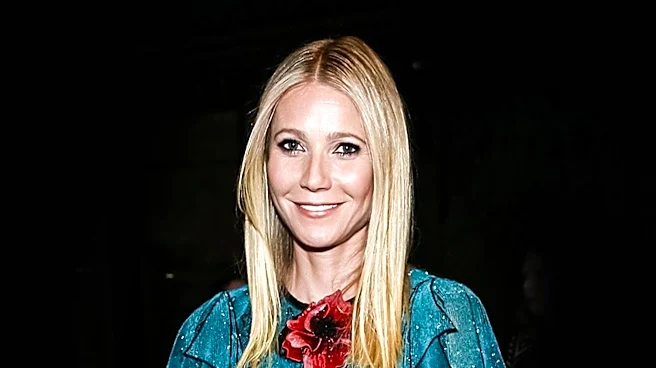
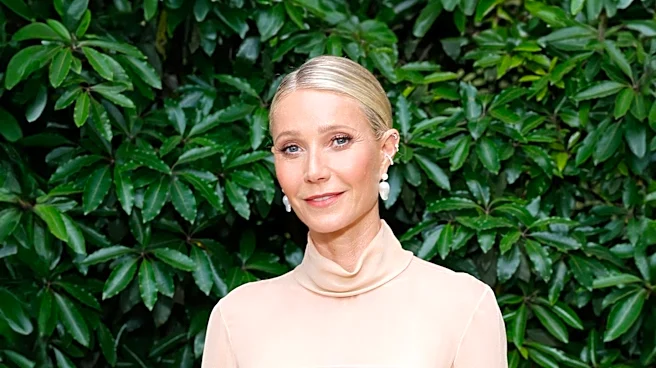
Gwyneth Paltrow, the renowned actress and founder of goop, recently shared insights into her divorce from Coldplay frontman Chris Martin and the concept of 'conscious uncoupling.' Speaking on the podcast 'Friends Keep Secrets,' Paltrow revealed that before
announcing their separation, she consulted friends whose parents had divorced to understand the long-term impacts on children. She specifically asked about the most painful aspects of their parents' divorces, aiming to avoid similar pitfalls for her own children, Apple and Moses. This proactive approach led her and Martin to commit to prioritizing their children's well-being, even if it meant remaining a family without being a couple. A couples therapist introduced them to the idea of 'conscious uncoupling,' a term that later became widely discussed and, at times, criticized. Paltrow recounted an instance where she and Martin diffused a tense moment during a family brunch by stepping outside, embracing, and agreeing to 'let it go,' demonstrating their commitment to maintaining a peaceful co-parenting relationship.
Why It's Important?
Paltrow's public discussion of 'conscious uncoupling' holds significance as it challenges traditional narratives surrounding divorce and offers an alternative model for family restructuring. In a society where divorce often leads to acrimony and fractured family dynamics, her approach emphasizes cooperation and the sustained well-being of children. This perspective can influence public perception of divorce, encouraging more amicable separations and fostering healthier post-divorce relationships between parents. For families navigating separation, Paltrow's experience provides a high-profile example of prioritizing children's emotional stability over personal grievances. The concept also highlights the evolving understanding of family structures, moving beyond the nuclear family ideal to embrace diverse forms of familial support. While the term itself has faced scrutiny, its underlying principle of intentional, respectful separation for the sake of children offers a valuable framework for many.
What's Next?
The continued public discourse around 'conscious uncoupling' and similar approaches to divorce suggests a growing societal interest in more constructive separation methods. As high-profile individuals like Paltrow share their experiences, it is likely to further normalize conversations about co-parenting strategies and the importance of children's emotional health during and after divorce. This could lead to increased demand for therapeutic services specializing in amicable separations and co-parenting support. Furthermore, the concept may influence legal frameworks and mediation practices, encouraging solutions that prioritize long-term family harmony over adversarial proceedings. The ongoing evolution of family dynamics in the U.S. indicates a trend towards more flexible and inclusive definitions of family, with 'conscious uncoupling' serving as one example of this shift.
Beyond the Headlines
The 'conscious uncoupling' narrative, as championed by Gwyneth Paltrow, delves into deeper societal implications regarding the perception of divorce and family. It challenges the ingrained cultural notion that divorce inherently signifies failure and instead reframes it as a conscious decision to restructure a family unit with mutual respect and shared responsibility. This perspective can alleviate some of the stigma associated with divorce, particularly for children who often feel caught in the middle. Ethically, it promotes a model of personal accountability and emotional maturity in navigating complex relationships. Culturally, it reflects a broader trend towards individual well-being and intentional living, extending even to the dissolution of marriages. The long-term impact could be a more compassionate and understanding societal approach to divorce, fostering environments where children of separated parents feel secure and loved by both. It also underscores the power of language in shaping public perception, as the term 'conscious uncoupling' itself sparked widespread debate and re-evaluation of divorce terminology.