
What's Happening?
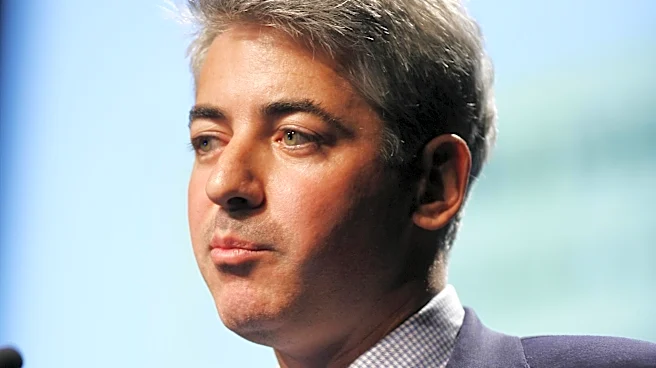
Billionaire investor and Pershing Square Capital CEO Bill Ackman has publicly recommended 'Money to Burn,' a book by William D. Cohan. Ackman, known for occasionally sharing book recommendations, described
the book as 'not to be missed' and 'movie-worthy.' Published in September, 'Money to Burn' chronicles the journey of Leon Black, cofounder of private equity giant Apollo Global Capital, and his eventual downfall and resignation. Black's resignation was prompted by scrutiny over his alleged ties to convicted sex offender Jeffrey Epstein. Ackman noted that the book delves into themes of business building, investing, private credit, and the power struggles often characteristic of investment firms. He also mentioned that the book touches on the fact that Black was investigated for sexual assault allegations but was not charged, as revealed by the Epstein files released by the U.S. Department of Justice.
Why It's Important?
Bill Ackman's endorsement of 'Money to Burn' brings significant attention to the book and the complex narrative surrounding Leon Black and Apollo Global Capital. For the U.S. financial industry, this highlights the ongoing scrutiny and ethical considerations within private equity and investment firms, particularly concerning leadership conduct and associations. The book's exploration of power dynamics and the challenges of business building in the financial sector offers valuable insights for investors, business leaders, and those interested in corporate governance. Ackman's recommendation, coming from a prominent figure in finance, can influence public perception and potentially spark further discussions about accountability and transparency in the upper echelons of Wall Street, especially in light of the Epstein scandal's broader implications for powerful individuals.
What's Next?
The recommendation by Bill Ackman is likely to boost sales and readership of 'Money to Burn,' potentially leading to wider public discussion about the events and individuals detailed in the book. This increased attention could reignite conversations about corporate ethics, the responsibilities of financial leaders, and the regulatory oversight of private equity firms in the U.S. It may also encourage other prominent figures to share their perspectives on the book's themes. For Apollo Global Capital, while the book covers past events, renewed public interest could bring historical controversies back into the spotlight. The book's 'movie-worthy' description by Ackman might also attract interest from the entertainment industry, potentially leading to adaptations that further disseminate its narrative.
Beyond the Headlines
Ackman's recommendation of 'Money to Burn' delves into the deeper cultural and ethical dimensions of the U.S. financial world. The book's focus on Leon Black's journey and downfall, particularly in connection with Jeffrey Epstein, underscores the persistent issues of power, influence, and accountability among the elite. It raises questions about how personal conduct and associations can impact professional legacies and the reputation of major financial institutions. The narrative also touches on the legal complexities surrounding such allegations, where investigations may occur without charges, leaving a lingering shadow. This situation reflects a broader societal concern about justice and transparency, especially when powerful individuals are involved, and how these stories are told and consumed by the public, influencing perceptions of Wall Street and its leaders.