




What's Happening?
Addison Bay, an athleisure brand founded by Marguerite Adzick in Philadelphia in 2018, has expanded its operations to become a national apparel brand, shipping to all 50 states. The company, which started with a four-piece collection, now releases approximately
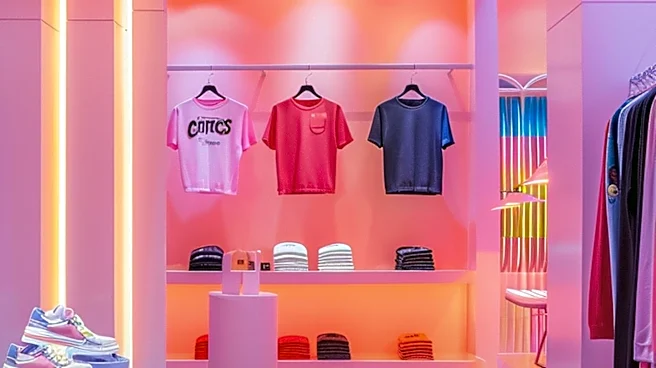
20 collections annually and manages its design, shipping, and other operations from its Market Street headquarters. Adzick initiated the brand after observing the widespread adoption of activewear beyond the gym in areas like Rittenhouse Square, recognizing a significant market movement. The brand's signature product, the everyday legging, features a fashion-forward style with iconic six stripes on one leg, designed for daily wear. A recent milestone for Addison Bay was a partnership with the Philadelphia Eagles, which saw one item from the Eagles collection sell out within 20 minutes of its launch. The brand plans its designs about a year in advance, often naming products after Philadelphia streets, and has opened its fourth store in Dallas, Texas, in addition to selling through retailers like Dillard's.
Why It's Important?
The nationwide expansion of Addison Bay highlights the continued growth and consumer demand within the athleisure market in the U.S. This trend signifies a shift in consumer preferences towards comfortable, versatile clothing that blurs the lines between athletic wear and everyday fashion. For the U.S. retail industry, Addison Bay's success demonstrates that niche brands, even those starting small, can achieve significant national reach by tapping into evolving lifestyle trends and strategic partnerships, such as with professional sports teams. The brand's ability to sell out products quickly and expand its physical footprint indicates a robust market for specialized apparel that combines style with functionality. This growth also benefits local economies, as the company maintains its headquarters and operations in Philadelphia, contributing to job creation and economic activity in the region. The emphasis on comfort and personal connection in athleisure resonates with a broad demographic, from students to professionals, indicating a sustained market opportunity for brands that can effectively cater to these needs.
What's Next?
Addison Bay is expected to continue its growth trajectory by leveraging its established national presence and expanding retail partnerships. The brand's strategy of releasing numerous collections annually and incorporating fashion-forward elements suggests a continuous effort to stay relevant and appealing to its customer base. Future developments may include further expansion into new markets, both through additional physical stores and increased online presence. The success of its collaboration with the Philadelphia Eagles could also pave the way for more partnerships with other sports organizations or influencers, further boosting brand visibility and sales. The company's commitment to its Philadelphia roots, while expanding nationally, indicates a potential model for other regional brands looking to scale. Continued focus on customer connection and comfort, which are key drivers of the athleisure market, will likely remain central to Addison Bay's strategy as it navigates the competitive retail landscape.
Beyond the Headlines
The success of Addison Bay reflects a broader cultural shift in the U.S. towards a more casual and health-conscious lifestyle. The integration of activewear into daily wardrobes signifies a change in societal norms regarding appropriate attire for various settings, from errands to casual dining. This trend has implications for traditional fashion retailers, prompting them to adapt their offerings to include more athleisure options or risk losing market share. Furthermore, the brand's origin story—starting from a home and expanding nationally—underscores the power of entrepreneurial spirit and the accessibility of e-commerce platforms in today's business environment. The emphasis on comfort and versatility also touches upon psychological aspects of consumer behavior, where clothing choices are increasingly linked to well-being and personal expression. The 'Made in PA' aspect, while not explicitly stated as a core marketing strategy, could also subtly appeal to consumers interested in supporting local or domestically produced goods, adding another layer of appeal beyond just style and comfort.