




What's Happening?
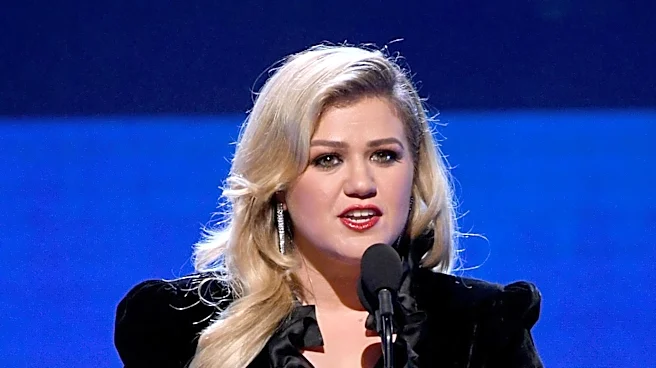
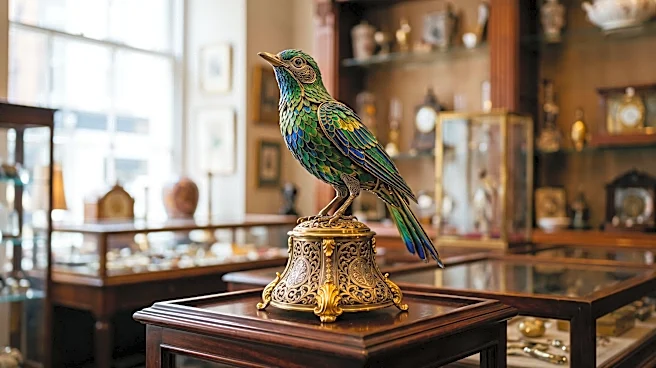
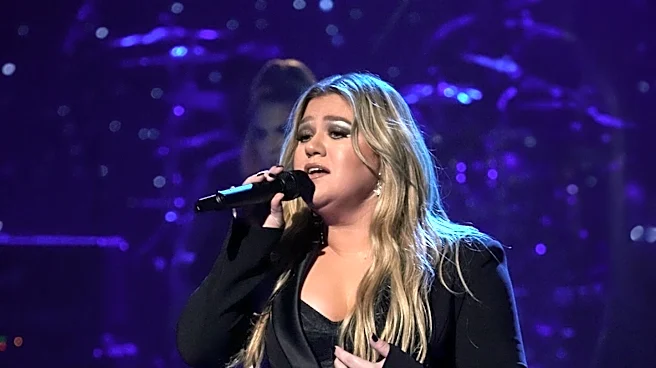
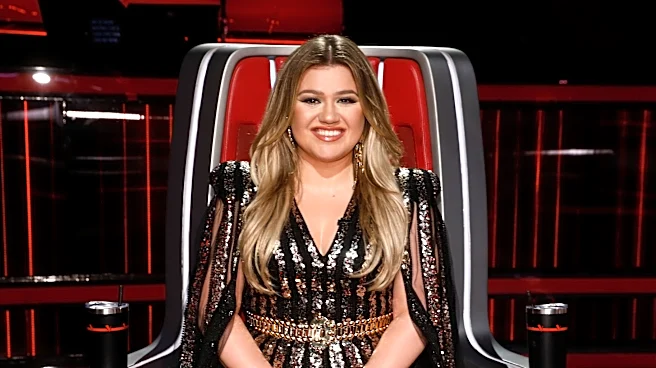
Pop star Kelly Clarkson is involved in a viral social media feud with Art of Play, a Brooklyn novelty boutique, following a weekend visit. Clarkson claims an employee at the store treated her condescendingly, implying she couldn't afford a $15,000 mechanical
singing bird named 'Molly.' She likened the experience to a scene from the movie 'Pretty Woman,' stating the clerk gave her an 'elevator eye' and offered to find something 'comparable.' Clarkson later posted video evidence showing the $15,000 price tag next to the bird to support her account. Art of Play, however, denies Clarkson's claims, stating that 'Molly' is a permanent fixture and mascot not for sale. The store asserts they explained that a twin automaton could be commissioned for $15,000 from the artist and offered to show her a $2,000 in-store option, which Clarkson allegedly did not stay to see. The boutique expressed shock at the backlash from Clarkson's fans.
Why It's Important?
This public dispute highlights the growing influence of celebrity social media presence on small businesses and the rapid spread of viral content. Clarkson's large following can significantly impact a small business's reputation and sales, as evidenced by the backlash Art of Play received. The incident also touches on themes of consumer experience, perceived classism in retail, and the power dynamics between celebrities and local establishments. For consumers, it raises questions about the accuracy of online narratives and the importance of hearing both sides of a story. For businesses, it underscores the challenges of managing public relations in the age of instant social media reactions, where a single negative celebrity encounter can quickly escalate into a widespread controversy, potentially affecting their livelihood.
What's Next?
The immediate aftermath of the feud has seen Art of Play facing significant online backlash from Kelly Clarkson's fans, while Clarkson has doubled down on her claims. The boutique has publicly responded and stated they reached out to Clarkson privately to resolve the misunderstanding. It remains to be seen if a private resolution will be reached or if the public dispute will continue. The incident may prompt both parties to reflect on customer service interactions and public communication strategies. For Art of Play, managing its online reputation and potentially clarifying its sales policies for unique items will be crucial. For Clarkson, the event may highlight the impact of her social media posts on smaller entities. The broader public will likely continue to follow the story as a case study in celebrity-consumer interactions and viral disputes.
Beyond the Headlines
Beyond the immediate conflict, this feud touches on deeper societal issues regarding perception, privilege, and the retail experience. Clarkson's 'Pretty Woman' comparison resonates with many who have felt judged or dismissed in retail settings, tapping into a common frustration about perceived classism. Conversely, the boutique's perspective highlights the vulnerability of small businesses to public criticism, especially from influential figures, and the difficulty of controlling narratives in the digital age. The incident also raises questions about the nature of 'for sale' items in unique boutiques, where display pieces might have different statuses than inventory. Ultimately, it serves as a microcosm of how personal interactions can quickly become public spectacles, shaped by individual interpretations and amplified by social media, leading to complex discussions about fairness, respect, and accountability in public discourse.