




What's Happening?
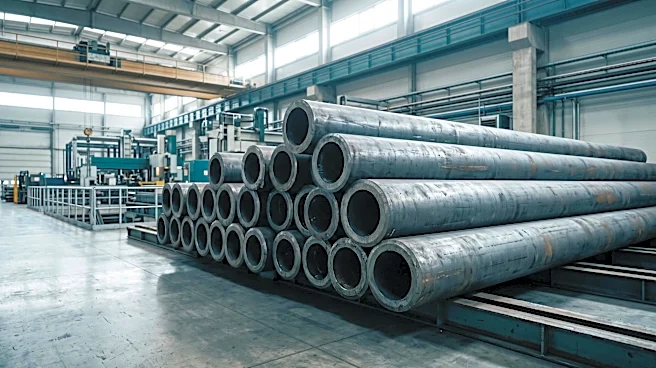
Montreal-based Nova Steel has announced the temporary layoff of 36 employees at its Saint-Patrick facility, effective November 13. The company, which is the sole Canadian producer of standard steel pipe used in various sectors including plumbing, heating,
and mining, attributes these layoffs to a surge in unfairly traded steel pipe imports. Despite investing over $200 million in new technology and modern buildings and proactively addressing import issues, Nova Steel maintains less than a 25% market share in Canada. The company emphasizes its commitment to using Canadian-produced hot rolled coils and states it will not compromise by purchasing imported coils to compete with unfairly priced imports. Scott Jones, president and CEO of Nova Steel, indicated that while the layoffs are currently temporary, they could become permanent if no new measures are implemented to address the issue of unfairly traded imports within the next two to three months.
Why It's Important?
This situation highlights the significant challenges faced by domestic steel producers in North America due to international trade practices. The layoffs at Nova Steel, a key Canadian manufacturer, underscore how global trade dynamics, specifically the influx of unfairly priced imports, can directly impact local employment and industrial stability. For the U.S. steel industry, this event serves as a cautionary tale, demonstrating the potential for similar pressures from international competition. It also emphasizes the importance of robust trade policies and enforcement mechanisms to protect domestic industries and their workforces. The call for a 'North American fortress approach to steel' suggests a broader regional concern about maintaining industrial capacity and securing supply chains against external market distortions, which could influence future trade discussions and policy decisions affecting both Canada and the United States.
What's Next?
Nova Steel is urging the federal government to take immediate action to mitigate the impact of unfairly traded imports. The company's specific requests include strengthening trade policy and enforcement to curb dumped imports, adopting a 'North American fortress approach' to steel, and reinforcing 'Buy Canada' mandates for all government projects at federal, provincial, and municipal levels. Additionally, Nova Steel seeks incentives for private sector projects to prioritize Canadian steel. The outcome of these appeals will determine the future of the temporarily laid-off employees and could set a precedent for how the Canadian government responds to similar challenges in other industries. If no effective measures are implemented within the next few months, the temporary layoffs could become permanent, potentially leading to further job losses and a reduction in Canada's domestic steel production capacity.
Beyond the Headlines
The situation at Nova Steel extends beyond immediate job losses, touching upon critical aspects of national economic sovereignty and industrial policy. The company's refusal to engage in a 'race to the bottom' by purchasing imported hot rolled coils, despite competitive pressures, reflects a commitment to maintaining quality and supporting the domestic supply chain. This stance highlights a broader ethical and economic dilemma for industries facing cheaper foreign alternatives: whether to compromise on sourcing and quality for short-term competitiveness or to advocate for policy changes that level the playing field. The call for a 'North American fortress approach' suggests a potential shift towards more protectionist trade policies within the continent, which could have long-term implications for international trade relations and the global steel market. This scenario also brings to light the vulnerability of specialized manufacturers to global market fluctuations and the necessity for governmental support to ensure their survival and the stability of their workforces.