

What's Happening?
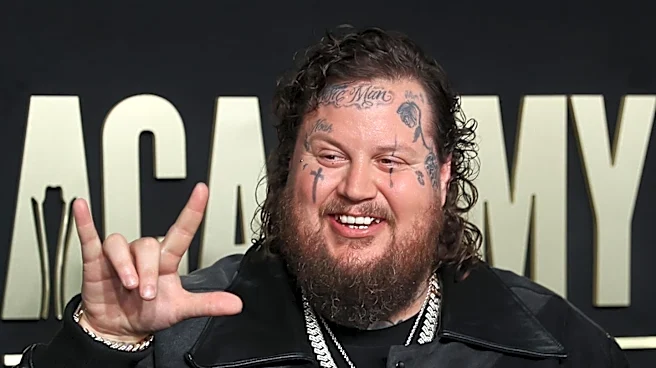
Newsmax host Carl Higbie publicly deleted Jelly Roll's music from his phone during a live broadcast of 'Frontline' in protest of jokes the musician made about President Trump. This action was a direct response to Jelly Roll's comments while guest-hosting
'Jimmy Kimmel Live!', where the artist addressed those upset by his Trump jokes, stating, 'if you wanted me to make jokes about Kamala Harris, you should have voted for her.' Jelly Roll also invited those threatening to stop listening to his music to 'go right ahead.' Higbie took this invitation seriously, demonstrating the deletion on camera. Newsmax contributor Kay Smythe also criticized Jelly Roll, calling him a 'celebrity sl*t' and predicting a decline in his popularity among fans following his late-night appearances. The incident underscores the strong reactions and partisan divides that can arise from celebrity political commentary.
Why It's Important?
This event highlights the intense political polarization within the U.S. and its impact on the entertainment industry and consumer behavior. The public deletion of an artist's music by a media personality serves as a symbolic act of protest, demonstrating how political disagreements can lead to boycotts and public shaming. For artists like Jelly Roll, navigating this landscape means potentially alienating segments of their fanbase, regardless of their intentions. The incident also reflects the power of media platforms, particularly partisan news outlets, to influence public opinion and mobilize audiences against perceived political adversaries. It underscores the challenges faced by entertainers who attempt to engage in political humor or commentary, as their words can be met with immediate and often severe backlash from politically charged audiences and media figures.
What's Next?
The public deletion of Jelly Roll's music by a Newsmax host could lead to further discussions about the role of political commentary in entertainment and the responsibilities of public figures. It may also prompt other media personalities and political commentators to take similar actions against artists whose views they oppose, further entrenching partisan divides in cultural consumption. For Jelly Roll, this incident might solidify his image among certain political demographics, potentially boosting his appeal to some while alienating others. The broader implication is a continued trend where political alignment increasingly dictates consumer choices, extending beyond traditional political spheres into music, film, and other forms of entertainment. Artists may face increased pressure to either align with a political side or remain strictly neutral to avoid such public condemnations.
Beyond the Headlines
This incident goes beyond a simple disagreement, touching on the broader cultural phenomenon of 'cancel culture' and the weaponization of consumer choices for political ends. It illustrates how political identity has become deeply intertwined with personal identity, leading individuals to reject cultural products associated with opposing viewpoints. The act of deleting music on-air transforms a personal preference into a public political statement, encouraging others to follow suit. This trend can stifle artistic expression and lead to a more homogenous cultural landscape, where artists might self-censor to avoid controversy. It also raises questions about the role of media in fostering division versus promoting dialogue, as the public display of rejection can reinforce echo chambers and deepen societal rifts rather than encouraging understanding or debate.