

What's Happening?
The FIFA World Cup trophy, a symbol of triumph in soccer, was designed by Italian sculptor Silvio Gazzaniga in Milan. Following Brazil's permanent acquisition of the original Jules Rimet Trophy in 1970, FIFA sought a new design through an open competition.
Gazzaniga's creation, featuring two figures spiraling towards an orb representing Earth, was selected from over 50 proposals. His design captures the athlete's struggle, the fan's jubilation, and the moment of victory. The trophy, made of 18-carat gold and standing 36 centimeters tall, is awarded to the World Cup winners but is returned to FIFA after the tournament, with the winning team receiving a gold-plated replica. Gazzaniga's design has been used since the 1974 World Cup and will continue to be used through at least 2038.
Why It's Important?
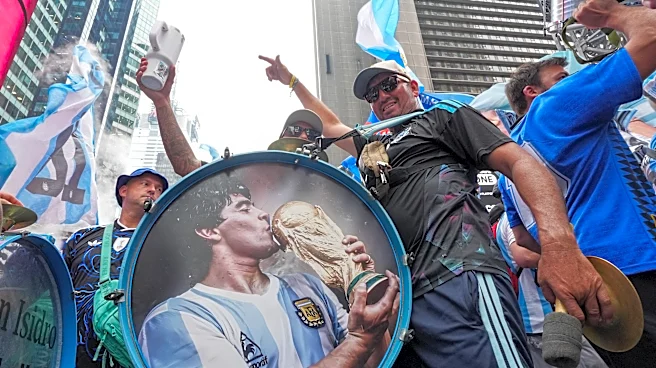
The World Cup trophy is not just a prize but a global icon representing the pinnacle of achievement in soccer. Its design embodies the spirit of competition and the universal appeal of the sport. The trophy's continued use underscores its significance in the soccer world, symbolizing not only victory but also the cultural and emotional connections fans have with the game. For FIFA, maintaining this iconic design helps preserve the tradition and prestige associated with the World Cup, reinforcing its status as the most coveted prize in international soccer. The trophy's history, including the theft and loss of the original Jules Rimet Trophy, adds to its mystique and allure.
What's Next?
The World Cup trophy will continue to be a central element of the tournament's tradition, with its design remaining unchanged through at least 2038. As the tournament evolves, the trophy will likely continue to be a focal point for both players and fans, symbolizing the ultimate goal in soccer. FIFA's decision to retain the trophy's design reflects a commitment to preserving the historical and cultural significance of the World Cup. Future tournaments will see new champions lifting the trophy, each adding to its storied legacy and reinforcing its status as a symbol of global sportsmanship and excellence.
Beyond the Headlines
The World Cup trophy's design by Gazzaniga highlights the intersection of art and sports, showcasing how artistic expression can capture the essence of athletic achievement. The trophy's creation involved not just technical skill but also a deep understanding of the emotions and narratives that define sports. This artistic dimension adds a layer of cultural significance to the trophy, making it a piece of art as much as a sports award. The preservation of Gazzaniga's original drawings and prototypes by his family ensures that the artistic legacy of the trophy continues to be appreciated and studied.