



What's Happening?
The Boston Red Sox are reportedly not expected to re-sign pitcher Sonny Gray, who declined his mutual option after a strong 2026 season. Gray, 36, posted a 2.72 ERA and is now a free agent with numerous suitors. The Red Sox's decision stems from their
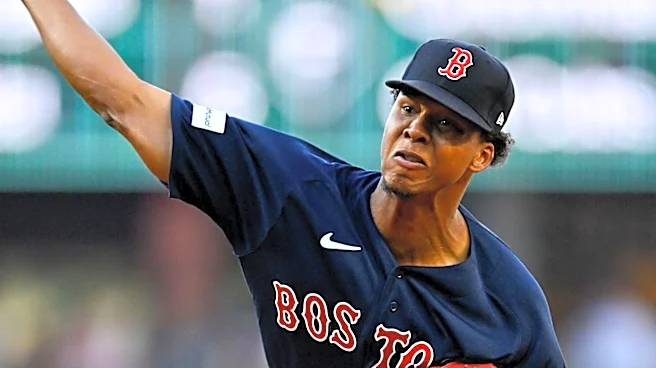
confidence in the expected return to health of Garrett Crochet and the emergence of Payton Tolle. The team's projected rotation for the upcoming season includes Crochet, Tolle, Ranger Suarez, and Jake Bennett. Additionally, the Red Sox anticipate Brayan Bello will return to his 2025 form as a quality starter, citing his second-half success last season as a reassuring factor. While Gray was considered the team's best starter, Boston appears to be prioritizing other needs and relying on its pitching pipeline to stabilize the rotation, according to The Boston Globe's Alex Speier.
Why It's Important?
This strategic shift by the Red Sox indicates a move towards developing and relying on younger, internal pitching talent rather than investing heavily in a veteran free agent like Sonny Gray. For the Red Sox, this approach could lead to long-term financial flexibility and a sustainable pitching staff if their prospects perform as expected. However, it also carries the risk of a less experienced rotation in a competitive league, potentially impacting their immediate contention status. For the broader MLB market, Gray's availability means another top-tier starter is on the market, which could drive up prices for other pitching free agents and influence the offseason strategies of other teams looking to bolster their rotations. The Red Sox's confidence in their internal options suggests a belief in their player development system, which could serve as a model for other organizations.
What's Next?
The Red Sox will now focus on integrating Garrett Crochet and Payton Tolle into their starting rotation, alongside Ranger Suarez, Jake Bennett, and Brayan Bello. The team is expected to prioritize lineup upgrades, viewing them as more critical than re-signing Gray, given their confidence in their pitching prospects. This means the Red Sox will likely be active in the free-agent market for offensive players. Meanwhile, Sonny Gray will be a highly sought-after free agent, with multiple teams expected to pursue him for his proven performance and veteran leadership. The Red Sox's chief baseball officer, Craig Breslow, will continue to assess the roster, potentially looking for additional pitching depth, but the primary focus appears to be on offensive improvements and the development of their current pitching staff.
Beyond the Headlines
The Red Sox's decision to move on from Sonny Gray reflects a broader trend in MLB where teams increasingly weigh the cost and age of veteran free agents against the potential of younger, cost-controlled talent. This strategy, if successful, could redefine how teams build competitive rosters, emphasizing sustainable internal development over expensive external acquisitions. It also highlights the growing importance of player development and scouting departments in identifying and nurturing talent that can contribute at the major league level. The potential success or failure of this approach by the Red Sox could influence other franchises to either double down on veteran signings or commit more fully to a youth movement, shaping future free agency markets and team-building philosophies across the league.