





What's Happening?
GitLab is advancing its DevSecOps platform by integrating AI as a core productivity multiplier and strengthening its Security Factory: Code Scanning team. The company aims to increase developer productivity, improve operational efficiency, and reduce
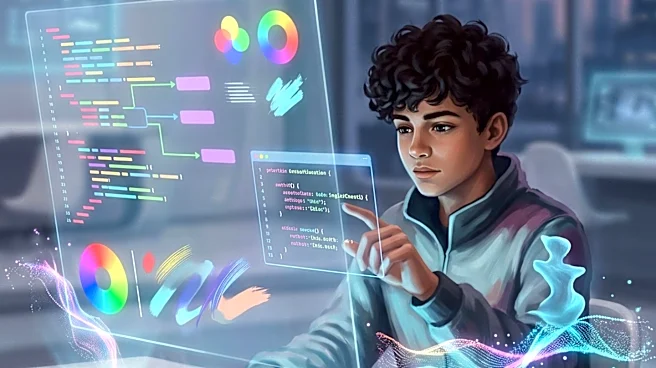
security and compliance risks for its users. GitLab's platform, trusted by over 50 million registered users and more than 50% of the Fortune 100, brings together various functionalities such as source code management, version control, issue tracking, project planning, continuous integration, and continuous delivery. The enhanced static analysis engine is designed to help developers identify and rectify security vulnerabilities within their code. This involves modeling programs, parsing source code into intermediate representations, resolving symbols, building call graphs, and tracking tainted data across different files and languages. The company emphasizes the use of AI agents to write and review code from specifications, under human direction, to ensure trustworthiness and efficiency in the development process.
Why It's Important?
This development is significant for the U.S. technology and business sectors as it addresses the growing demand for more secure and efficient software development lifecycles. By integrating AI into its DevSecOps platform, GitLab is setting a new standard for how organizations can manage and mitigate security risks in their software. The focus on static analysis and AI-assisted tooling can lead to a substantial reduction in vulnerabilities, which is crucial for businesses handling sensitive data and critical infrastructure. This move could also influence other companies in the DevSecOps space to adopt similar AI-driven approaches, fostering innovation and competition. For the Fortune 100 companies and other large enterprises that rely on GitLab, these enhancements mean faster, more secure software deployment, potentially leading to increased market competitiveness and reduced operational costs associated with security breaches and compliance failures. The emphasis on remote work and open-source principles also reflects a broader trend in the tech industry, promoting flexibility and collaborative development.
What's Next?
GitLab will continue to refine its AI-assisted tooling and static analysis engine, with ongoing efforts to expand its capabilities to new languages and frameworks. The company expects its team members to further incorporate AI into their daily workflows to drive efficiency and innovation. Future developments will likely include more sophisticated AI agents for code writing and review, along with enhanced mechanisms for testing, measuring, and validating the engine's findings against benchmark applications with known vulnerabilities. GitLab's commitment to continuous knowledge exchange and its high-performance culture suggest that further advancements in DevSecOps and security will be a priority. The company's influence on industry standards for secure software development is expected to grow, potentially leading to broader adoption of AI in security analysis across the U.S. tech landscape. Additionally, GitLab's remote-global operational model will continue to shape its talent acquisition and development strategies.
Beyond the Headlines
The deeper implications of GitLab's AI integration extend to the evolving nature of software engineering and cybersecurity. The reliance on AI agents for code generation and review raises questions about the future roles of human developers and the ethical considerations of AI autonomy in critical software development. While AI can significantly enhance efficiency and security, ensuring the trustworthiness and reliability of AI-generated code will be paramount. This shift could lead to new educational and training requirements for developers, focusing on AI oversight and validation rather than solely on manual coding. Furthermore, the increased automation in security analysis could set new legal and compliance precedents, particularly concerning accountability for vulnerabilities in AI-assisted software. The move also highlights a broader industry trend towards 'AI as a core productivity multiplier,' suggesting a future where AI is not just a tool but an integral part of every aspect of the software development lifecycle, potentially reshaping the entire DevSecOps ecosystem.