




What's Happening?
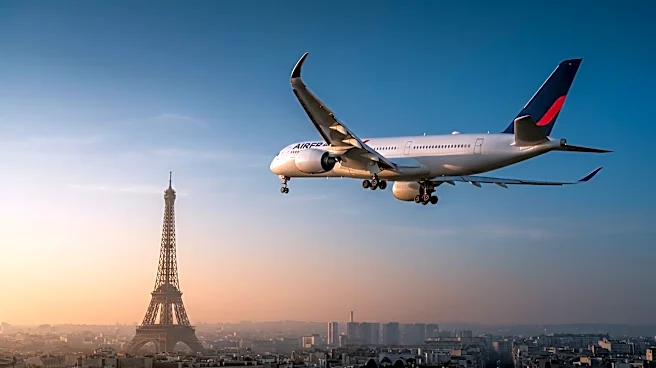
Air France and Rent the Runway have collaborated on an immersive marketing campaign called 'Runway to France: The French Sabbatical.' This initiative sent a single content creator, Candace Marie Stewart, on a 30-day journey across France. The campaign aimed
to generate deep, genuine storytelling through slow travel. During the trip, 52 live posts were created, resulting in 10.5 million combined impressions across both the creator's and the brands' channels. Additionally, Rent the Runway's specially curated 'French Sabbatical' collection garnered 539,000 total website impressions, and 15,400 entries were submitted for an Air France x Rent the Runway French getaway package. This partnership highlights a growing trend in experiential marketing, where brands move beyond traditional advertising to create unique, engaging experiences for their audience.
Why It's Important?
This collaboration signifies a shift in marketing strategies within the U.S. and global business landscape, emphasizing authentic experiences over conventional advertisements. For Air France, it provides a unique way to promote travel and destinations, potentially attracting a demographic interested in immersive cultural experiences rather than just transportation. Rent the Runway benefits by showcasing its fashion in real-world, aspirational settings, directly linking its products to a lifestyle of travel and exploration. The success metrics, including millions of impressions and thousands of website visits and contest entries, demonstrate the effectiveness of this approach in capturing consumer attention and driving engagement. This model could influence other brands to invest in similar experiential campaigns, moving away from purely digital or static advertising to more dynamic and interactive methods that resonate deeply with consumers.
What's Next?
The success of the 'French Sabbatical' campaign is likely to encourage Air France, Rent the Runway, and other brands to explore similar experiential marketing initiatives. We can anticipate more partnerships between travel companies and lifestyle brands, focusing on unique, long-form content creation and influencer collaborations. Brands may increasingly allocate marketing budgets towards immersive experiences that offer genuine storytelling opportunities, aiming to build stronger emotional connections with their target audiences. This could lead to a proliferation of 'sabbatical-style' or 'journey-based' campaigns, where creators are embedded in experiences designed to highlight products or services in an authentic context. The industry will likely monitor the long-term impact of such campaigns on brand loyalty and sales to refine future strategies.
Beyond the Headlines
This campaign taps into a broader cultural desire for authentic experiences and a break from routine, reflecting a growing interest in 'sabbatical travel' as a form of personal and professional rejuvenation. Beyond its marketing objectives, the 'French Sabbatical' subtly promotes the idea of taking extended breaks for personal growth and exploration, a concept gaining traction in a post-pandemic world. It also underscores the evolving role of content creators, who are no longer just advertisers but storytellers capable of generating significant engagement through their personal journeys. The campaign's emphasis on 'slow travel' also aligns with a more mindful and sustainable approach to tourism, potentially influencing consumer preferences towards more enriching and less hurried travel experiences. This could lead to a re-evaluation of work-life balance and the value of extended personal time in professional cultures.