






What's Happening?
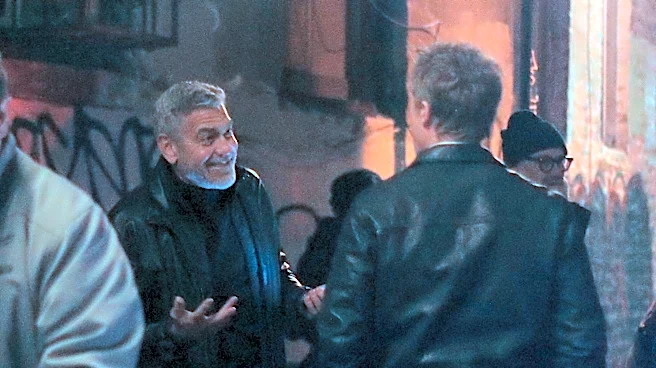
Actor George Clooney is planning to open an Italian restaurant in Cotignac, Provence, France, and his business partner, Graham Porter, has stated that Clooney is actively seeking a 'real Italian mama' to run the kitchen. Porter indicated that they are
looking for a woman between 45 and 70 years old to embody the authentic Italian culinary experience. This search has ignited a debate regarding the perpetuation of stereotypes associated with Italian cuisine abroad. The restaurant will be located in the former 'Les 3 Marches' building, with renovations already underway, and is expected to open in May. While the mayor of Cotignac, Jean-Pierre Véran, has confirmed Clooney's involvement, a formal application for the restaurant had not yet been received by the municipality as of early October. The name and specific menu details for the establishment remain undisclosed.
Why It's Important?
This development is important as it highlights the ongoing discussion surrounding cultural authenticity and stereotypes in the global culinary landscape. The explicit search for an 'Italian mama' for a restaurant in France, particularly one backed by a celebrity, underscores how certain cultural images are commodified and marketed. While intended to evoke a sense of tradition and home-cooked quality, this approach can also be seen as reducing a complex culinary heritage to a simplistic, often gendered, stereotype. For the U.S. market, where Italian cuisine is immensely popular, this incident reflects broader trends in how foreign food cultures are perceived and presented, potentially influencing consumer expectations and the representation of diverse culinary traditions. It also raises questions about the role of celebrity endorsement in shaping these perceptions and the potential for cultural appropriation.
What's Next?
The opening of George Clooney's Italian restaurant in Cotignac is anticipated in May, with further details about its name and menu expected to be revealed closer to the launch. The ongoing debate about the 'Italian mama' concept is likely to continue, potentially influencing public reception and media coverage of the establishment. The success of the restaurant will depend not only on its culinary offerings but also on how it navigates these cultural sensitivities. There may be increased scrutiny from food critics and cultural commentators regarding the authenticity and representation of Italian cuisine. Additionally, the project could attract significant tourism to Cotignac, similar to the 'Clooney effect' observed in Lake Como, potentially impacting the local economy and community dynamics.
Beyond the Headlines
Beyond the immediate news, this situation delves into deeper implications concerning cultural identity, marketing strategies, and the globalized food industry. The 'Italian mama' archetype, while seemingly benign, can reinforce a narrow and idealized view of Italian women and their role in cuisine, overlooking the diversity and evolution of Italian culinary practices. This incident prompts reflection on how different cultures are represented in commercial ventures and the ethical considerations involved in leveraging cultural stereotypes for brand appeal. It also highlights the power of celebrity influence in shaping public discourse and consumer trends, raising questions about the responsibility that comes with such influence. The discussion extends to the broader challenge of maintaining cultural integrity while participating in a global market that often simplifies and packages cultural elements for mass consumption.