




What's Happening?
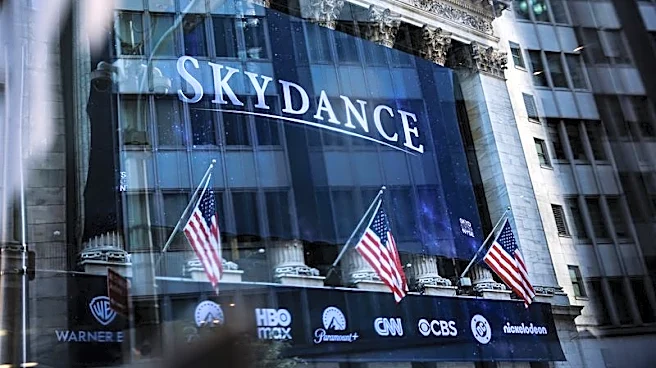
Skydance CEO David Ellison has stated that the newly combined company, following the merger of Paramount and Warner Bros. Discovery, will maintain a 'disciplined' approach to future sports rights acquisitions. This announcement was made during an earnings
call, where Ellison emphasized that every right must 'earn its place' within their portfolio. Skydance currently holds over three dozen premium sports agreements, including rights for the NFL, March Madness, UFC, College Football Playoff, MLB, NHL, and NASCAR. The company aims to achieve $6 billion in cost savings by 2029, suggesting a potential re-evaluation and streamlining of its extensive sports rights portfolio. Ellison indicated that decisions on sports rights will consider audience engagement, advertising value, streaming acquisition and engagement, and how inventory fits into the existing sports calendar.
Why It's Important?
This strategic shift by Skydance holds significant implications for the U.S. sports media landscape and the broader entertainment industry. With a focus on cost-cutting and a disciplined approach to bidding, Skydance may choose not to renew certain high-value sports contracts, such as its MLB and NHL deals expiring in 2028, which could save the company approximately $1 billion annually. This could open opportunities for other media companies, like Nexstar's The CW and Versant's USA Sports, which have signaled intentions to bid on sports rights that other networks might relinquish. The impending NFL rights reshuffling at the end of the decade will also influence bidding strategies, as legacy media companies may conserve funds to compete for NFL renewals. This could lead to a more competitive and fragmented market for sports broadcasting, potentially impacting viewership and advertising revenues across the industry.
What's Next?
Skydance's 'disciplined' approach suggests that the company will meticulously evaluate its current and future sports rights. This could lead to the non-renewal of certain contracts as they come to term, or the sublicensing of rights to other broadcasters to recoup investments. The company's focus on optimizing for growth and economics across its ecosystem means that decisions will be driven by a comprehensive analysis of advertising, distribution, and streaming interests. Other media entities are likely to closely monitor Skydance's moves, preparing to bid on any rights that become available. The upcoming NFL rights negotiations will be a critical test for all major players, as companies prioritize securing access to one of the most valuable sports properties. This period will likely see intense competition and strategic maneuvering within the sports media industry.
Beyond the Headlines
The shift towards a 'disciplined' approach in sports rights bidding by a major player like Skydance reflects a broader trend in the media industry, where companies are increasingly scrutinizing the financial viability of content acquisitions. This move could signal a potential cooling of the previously aggressive bidding wars for sports rights, leading to more rational valuations. The emphasis on 'earning its place' for each right suggests a data-driven approach, where audience engagement and economic returns are paramount. This could lead to a more fragmented sports viewing experience for consumers, as rights are distributed across various platforms and networks. Furthermore, it highlights the ongoing challenge for traditional media companies to adapt to changing consumption habits and the rising costs of premium content, particularly in the highly competitive sports broadcasting sector.