








What's Happening?
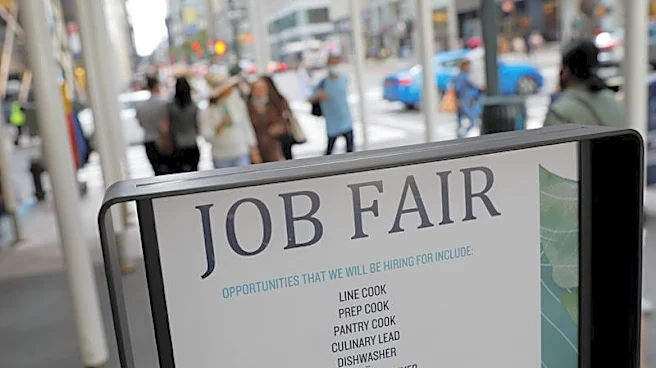
The U.S. labor market showed signs of struggling to gain momentum in October 2026, with employers adding only 29,000 jobs in September, and the unemployment rate increasing to 4.2%. This comes as consumer prices rose 3.7% over the past year, indicating
persistent inflation that is squeezing workers' paychecks. Revisions to previous months' payrolls further underscored the slowdown, with July revised down to a loss of 10,000 jobs and August's gain reduced to 133,000, collectively removing 60,000 jobs from earlier estimates. Despite the overall slowdown, demand for specific technical skills remains strong, and artificial intelligence (AI) is increasingly reshaping existing job roles. The Federal Reserve maintained the federal funds target range at 3.75% to 4% in October, citing the need for more information before making further moves, given the elevated inflation.
Why It's Important?
The current state of the U.S. labor market, characterized by slow job growth and rising inflation, presents significant challenges for businesses and employees. For organizations, particularly compensation teams, finalizing 2027 budgets is complicated by the need to balance market rates, performance, and affordability against the erosion of employee purchasing power. While overall hiring is slow, the strong demand for technical skills, such as those in electrical engineering and data centers, means that employers must strategically allocate resources to attract and retain talent in these specialized areas. The impact of AI is also crucial, as it is changing the nature of work within existing roles, requiring employers to reassess job descriptions, skill requirements, and compensation structures. The Federal Reserve's cautious stance on interest rates reflects the ongoing economic uncertainty, influencing borrowing costs and business spending decisions.
What's Next?
As the U.S. economy moves towards 2027, employers and policymakers will need to closely monitor the interplay between job growth, inflation, and technological advancements. Compensation teams are advised to look beyond national hiring numbers and focus on market pricing for critical positions, as demand for specific skills can vary significantly. They must also consider the impact of inflation on employee satisfaction and be prepared to explain their pay approaches. The ongoing integration of AI into the workplace necessitates a review of how existing roles are changing and how these changes affect job levels, career progression, and pay. Furthermore, the expansion of pay transparency laws, such as those in Connecticut and California, will require organizations to ensure their salary ranges are defensible and accurately reflect job roles and market value, adding a layer of compliance and strategic planning for businesses operating across multiple jurisdictions.
Beyond the Headlines
The current labor market dynamics point to a deeper transformation driven by AI and automation, as highlighted by a McKinsey Global Institute report. This report suggests that while AI could lead to job displacement in some areas, it is also expected to create more jobs than it eliminates over the next decade. This necessitates a proactive approach to workforce planning and reskilling, where employers invest in developing new skills among their existing workforce rather than solely competing for external talent. The ethical and legal implications of AI's impact on job roles and compensation are also emerging, requiring careful consideration of how to value new skills and responsibilities. The challenge extends beyond mere compliance with pay transparency laws to ensuring internal equity and external competitiveness in a rapidly evolving job market, where the definition of a 'job' itself is undergoing significant change.