







What's Happening?
Global demand for matcha has surged, leading Japanese growers to prioritize the production of tencha, the shade-grown green tea used for matcha. This shift has impacted the availability of other Japanese teas, such as bancha, which is sometimes used for hojicha.
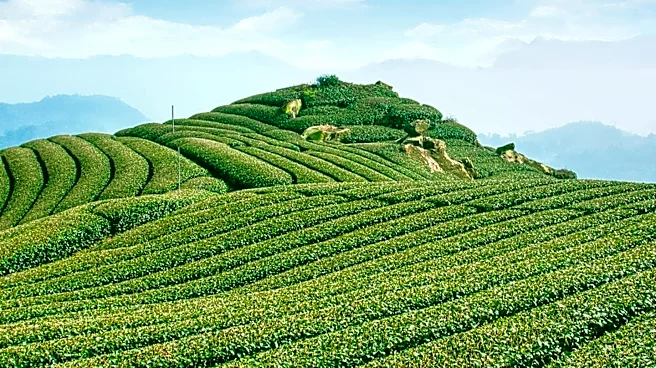
While Japanese matcha supply is currently tight, the global supply base is broadening significantly. Shabnam Weber, president of the Tea and Herbal Association of Canada and the Tea Association of the U.S.A., notes that matcha production is expanding beyond Japan to countries including China, South Korea, Taiwan, and Vietnam. China has emerged as a dominant producer, with iiMedia Research reporting that its matcha production exceeded 12,000 metric tons in 2025, accounting for nearly 70% of global production capacity. The grade and origin of matcha are crucial, as they affect its color, bitterness, and flavor, making ingredient selection vital for product development.
Why It's Important?
The expansion of matcha production beyond Japan, particularly China's significant rise as a producer, has profound implications for the U.S. food and beverage industry. This diversification of supply can help stabilize prices and ensure greater availability of matcha, which has become a popular ingredient in various products, from beverages to desserts. For U.S. manufacturers, this means more sourcing options, potentially reducing reliance on a single origin and mitigating risks associated with supply chain disruptions or climate variability in Japan. However, it also necessitates careful consideration of quality control and consistency, as matcha from different regions can vary significantly in taste and characteristics. Innovation teams in the U.S. will need to adapt their formulations and sourcing strategies to leverage this broader supply while maintaining product quality and consumer expectations.
What's Next?
U.S. food and beverage companies are likely to increasingly explore sourcing matcha from diverse origins beyond Japan. This could lead to new product innovations that highlight the unique flavor profiles of matcha from different countries. The emphasis on ingredient selection and formulation will intensify, as manufacturers seek to balance cost-effectiveness with quality and consumer preferences. There may also be a growing need for clear labeling and consumer education regarding the origin and characteristics of matcha, especially as the market becomes more complex. Furthermore, the increased competition among matcha producers could drive further advancements in cultivation and processing techniques globally, ultimately benefiting the variety and quality of matcha available in the U.S. market.
Beyond the Headlines
The global expansion of matcha production reflects a broader trend of popular food and beverage ingredients transcending their traditional geographical boundaries. This phenomenon can lead to cultural diffusion and economic opportunities but also raises questions about authenticity, traditional knowledge, and the impact on original producing regions. For Japan, maintaining the premium perception and unique cultural heritage of its matcha will be crucial in a market with increasing competition. The challenge for consumers and businesses alike will be to navigate this evolving landscape, distinguishing between different grades and origins of matcha, and understanding the implications for both taste and sustainability. This shift could also spur greater investment in agricultural technology and sustainable practices across all producing regions.