




What's Happening?
Virginia Beach, despite its reputation for having minimal natural waves, boasts a vibrant and enduring surf culture that spans over a century. The history of surfing in the city dates back to 1912 when James Jordan Jr. began surfing with a 12-foot wooden
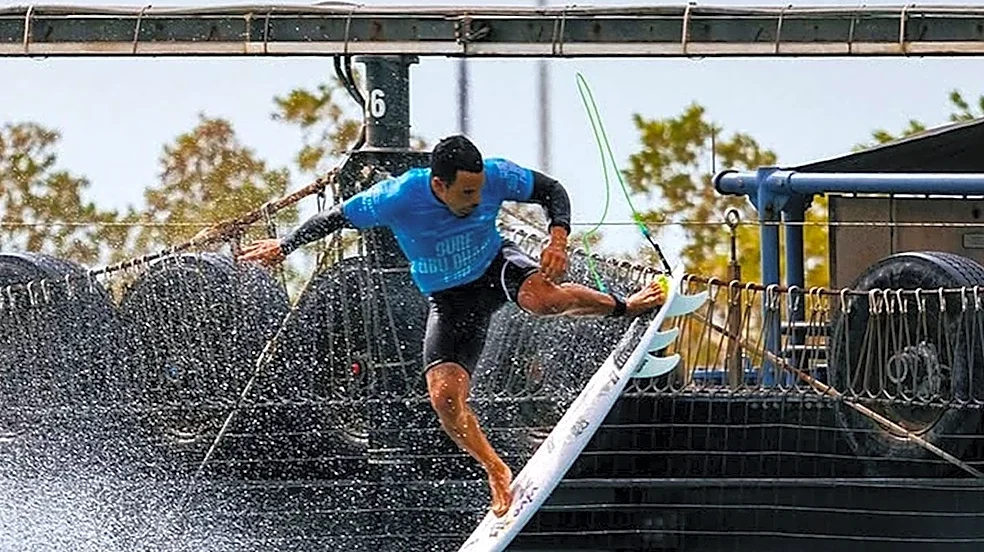
board brought from Hawaii. The post-World War II economic boom, coupled with advancements in surfboard technology—transitioning from heavy wooden boards to lighter fiberglass and plastic foam—significantly propelled surfing's popularity. The city has hosted the East Coast Surfing Championship, the world's longest-running surfing competition, since the 1960s. More recently, the opening of Atlantic Park Surf, an artificial lagoon capable of producing consistent, customizable waves, has been a 'game changer' for local surfers like Scott Cohen, who can now catch numerous perfect waves in a single session, a rarity in the natural ocean conditions of Virginia Beach.
Why It's Important?
The resilience and evolution of Virginia Beach's surf culture highlight how communities adapt and innovate to pursue their passions, even in the face of environmental limitations. The development of artificial wave technology, such as Atlantic Park Surf, signifies a growing trend in sports and recreation, offering controlled environments that democratize access and enhance training opportunities. This innovation not only supports the local surfing community but also positions Virginia Beach as a unique destination for surf enthusiasts, potentially boosting tourism and local businesses. The historical context, from early wooden boards to modern materials, illustrates the impact of technological advancements on sports. Furthermore, the increasing participation of women and girls in surfing, evidenced by events like the inaugural Super Girl Surf Festival, reflects broader societal shifts towards inclusivity in sports, challenging traditional gender norms and fostering a more diverse athletic community.
What's Next?
The continued operation and potential expansion of artificial wave facilities like Atlantic Park Surf could further solidify Virginia Beach's reputation as a surf destination, attracting more surfers and competitions. This might lead to increased investment in surf-related businesses, coaching, and events. The growing participation of women in surfing is likely to continue, potentially leading to more female-focused competitions, training programs, and representation within the sport. Local surfers will continue to balance traditional ocean surfing with the consistent conditions offered by artificial lagoons, potentially leading to new training methodologies and competitive strategies. The community's ongoing adaptation to technological advancements and demographic shifts will shape the future trajectory of surfing in Virginia Beach, ensuring its vibrant culture persists and evolves.
Beyond the Headlines
The story of Virginia Beach's surf culture extends beyond mere sport; it's a testament to human ingenuity and community spirit. The creation of artificial waves in a region naturally lacking them speaks to a desire to overcome environmental constraints and foster a specific lifestyle. This phenomenon raises questions about the authenticity of 'natural' versus 'engineered' sports experiences and their impact on local identity. The emphasis on community and shared passion among Virginia Beach surfers, even when waves are scarce, underscores the social and cultural dimensions of sports. It suggests that the essence of a sport can transcend its physical environment, rooted instead in the bonds and shared experiences of its participants. This cultural resilience, combined with technological innovation, offers a compelling narrative about how traditions are preserved and transformed in the modern era.