




What's Happening?
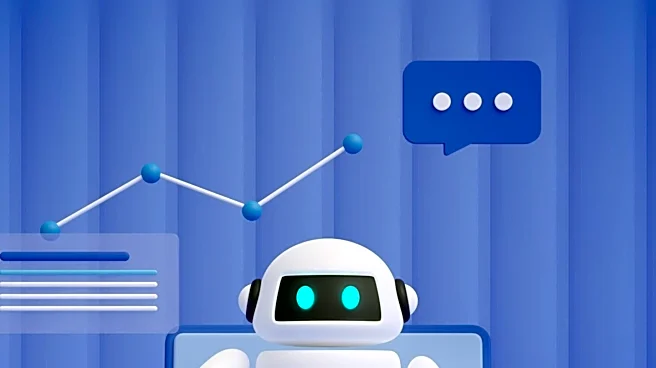
AI-powered chatbot assistants are being utilized to enhance customer service by providing 24/7 automated support. These intelligent chatbots are designed to instantly answer common customer questions, qualify leads, and guide users through websites. They
also offer seamless handoffs to human agents when more complex assistance is required. The technology aims to improve customer experience while simultaneously reducing the workload on human support staff. Key features of these AI chatbot systems include continuous availability, immediate responses to inquiries, efficient data collection for lead qualification, and the ability to learn and improve their performance over time. This automation addresses the challenge of businesses needing to provide support outside of traditional operating hours and manage high volumes of repetitive customer inquiries.
Why It's Important?
The integration of AI chatbot assistants is significant for businesses seeking to scale their customer service operations and maintain responsiveness in an always-on digital environment. By automating initial customer interactions, companies can ensure that potential clients receive immediate attention, which can be crucial for lead conversion and customer satisfaction. The ability of these chatbots to collect data and qualify leads streamlines sales processes, allowing human agents to focus on more complex or high-value interactions. This technology can lead to operational efficiencies, reducing the need for extensive human staffing for routine queries and potentially lowering customer service costs. For customers, it means faster access to information and support, improving their overall experience with a business.
What's Next?
Businesses are expected to increasingly adopt AI chatbot assistants to manage customer interactions, especially as the technology continues to evolve and become more sophisticated. The ongoing development of AI will likely lead to chatbots that can handle a wider range of complex queries and provide more personalized interactions. Future integrations may see these assistants becoming even more deeply embedded with other business tools, such as CRM systems, online scheduling platforms, and conversion rate optimization services, creating a more unified and efficient customer engagement ecosystem. Companies will likely focus on refining the learning capabilities of these AI tools to ensure they continuously improve their accuracy and effectiveness in addressing customer needs.
Beyond the Headlines
The widespread adoption of AI chatbot assistants raises broader implications for the future of work and customer expectations. While these tools offer significant benefits in efficiency and availability, there are ongoing discussions about the balance between automated and human interaction. Ethical considerations may arise regarding data privacy and the transparency of AI interactions, as customers may not always be aware they are interacting with a bot. Long-term, this shift could redefine the roles of customer service professionals, moving them towards more specialized problem-solving and relationship management, while routine tasks are increasingly handled by AI. The cultural impact could also be seen in how consumers come to expect instant, 24/7 service as a standard, pushing businesses to adapt or risk falling behind.