








What's Happening?
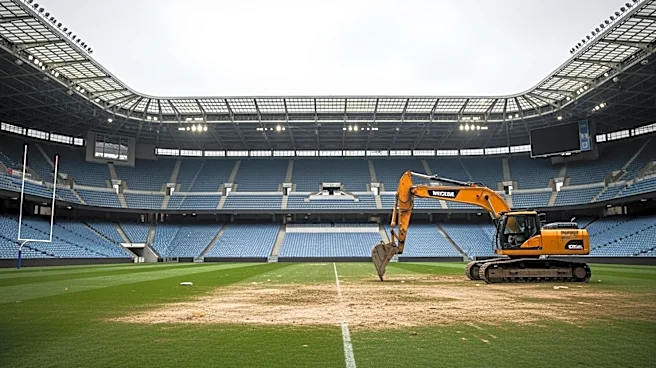
The demolition of Highmark Stadium, the former home of the Buffalo Bills, is underway in Orchard Park, New York. The stadium, which opened in 1973 as Rich Stadium, has been a significant venue for the Bills for 53 seasons. The demolition process began
after the stadium's power was disconnected on May 1, and it is expected to continue through March 2027. The dismantling involves over 900,000 square feet of steel, concrete, and seating. The Bills will transition to a new stadium located across Abbott Road, where they will begin playing home games starting in 2026. The demolition marks a significant change for the team and its fans, as the old stadium has been a central part of the Bills' history.
Why It's Important?
The demolition of Highmark Stadium represents a major transition for the Buffalo Bills and their fanbase. The move to a new stadium is part of a broader effort to modernize the team's facilities and enhance the game-day experience for fans. This change is significant for the local economy, as the construction and operation of the new stadium are expected to create jobs and stimulate economic activity in the area. Additionally, the new stadium is likely to offer improved amenities and infrastructure, potentially attracting more fans and events. The transition also reflects broader trends in the NFL, where teams are increasingly investing in state-of-the-art facilities to remain competitive.
What's Next?
As the demolition of Highmark Stadium progresses, the focus will shift to the completion and opening of the new stadium. The Buffalo Bills will need to ensure that the new facility is ready for the 2026 season, which involves finalizing construction and addressing any logistical challenges. The team will also likely engage with fans and the community to build excitement and support for the new venue. The success of the new stadium will depend on its ability to enhance the fan experience and support the team's performance on the field. The transition period will be closely monitored by stakeholders, including local businesses and government officials, who have a vested interest in the economic impact of the new stadium.